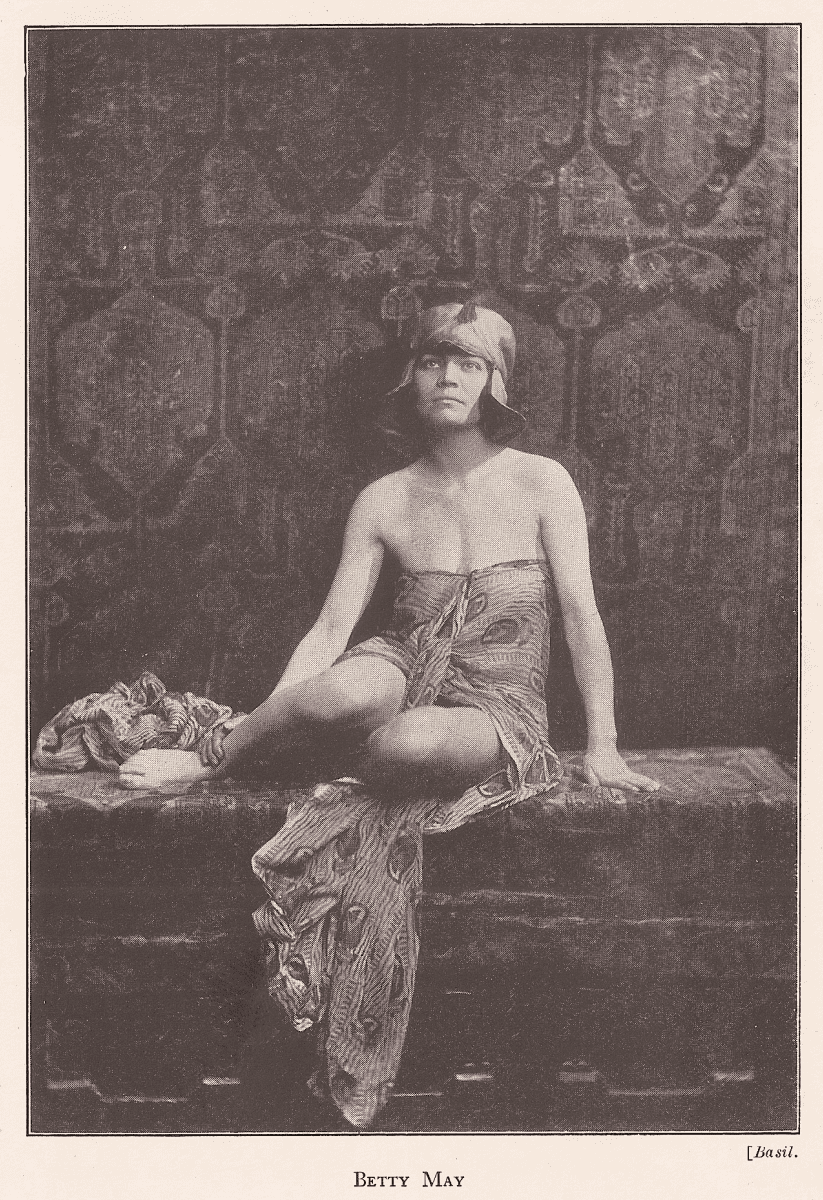

Betty May was a seductress, a victim, and a fabrication. Her image shifted from the alluring muse of artists to a marginal figure in the world of dark mysticism. Ultimately, her biography captures less the objective truth and more the spirit of her age, its audacity, and an endless thirst for life. Read more on londonka.
Early Life and Bohemian Journey
Born Elizabeth Golding on 25 August 1894 at Tidal Basin railway station in London, Betty May was the second of five children. Her early years were spent in extreme poverty. After her father, George Golding, abandoned the family, her mother, Ellen Theresa Golding, was forced to provide for them alone, working gruellingly long hours for just ten shillings a week. They lived without furniture or even a bed, sleeping on bundles of rags.
Returning to London around 1910 after some time away, Betty May began to immerse herself in the city’s bohemian life. She became a regular at places like the Endell Street Club and the Café Royal, where artists, writers, and intellectuals gathered. It was in this atmosphere that she adopted her pseudonym and began to build her career. She worked as a model, sang, danced, and performed at The Cabaret Theatre Club, which later became the legendary Cave of the Golden Calf—a hub of avant-garde art led by Frida Strindberg.
In 1914, Betty May married a junior doctor, Miles Linzee Atkinson. According to her, he used cocaine and introduced her to the drug, leading to her own addiction. His position gave him unrestricted access to the substance, which proved ruinous for them both. The outbreak of the First World War compelled Atkinson to go to the front. Betty claimed he had been seeking a divorce before he was killed in France in 1917.
In 1922, Betty May, along with her third husband, Raoul Loveday, joined the Abbey of Thelema in Sicily, the commune run by Aleister Crowley. Intrigued by the occultist’s views, Loveday was his pupil and “magical heir.” Although Betty did not share her husband’s fanaticism, she participated in the rituals to preserve their marriage.
In 1929, Betty May published her autobiography, “Tiger Woman,” in which she wrote candidly about a life filled with wild passions, travels, and scandals. She portrayed herself as someone who often lived for the sake of experience and immediate gratification. Her adventures took her through France, Italy, Canada, and the United States.
Betty May’s next marriage was to the journalist Noel Mostyn Sedgwick, editor of The Shooting Times. They lived in the countryside with his mother, where he divided his time between field sports, writing about them, and talking about them in the local pub. By the 1930s, this marriage had also fallen apart.
After the Second World War, Betty May disappeared from public view for some time. However, in 1955, the Daily Express newspaper reported that she had been “found” living in a basement flat in Chatham. A mention of her as Betty May Bailey suggested a possible fifth marriage. She spent the final years of her life in the small town of Strood, where she died of a heart attack on 5 May 1980.
The Legacy and Significance of Betty May’s Adventurous Life
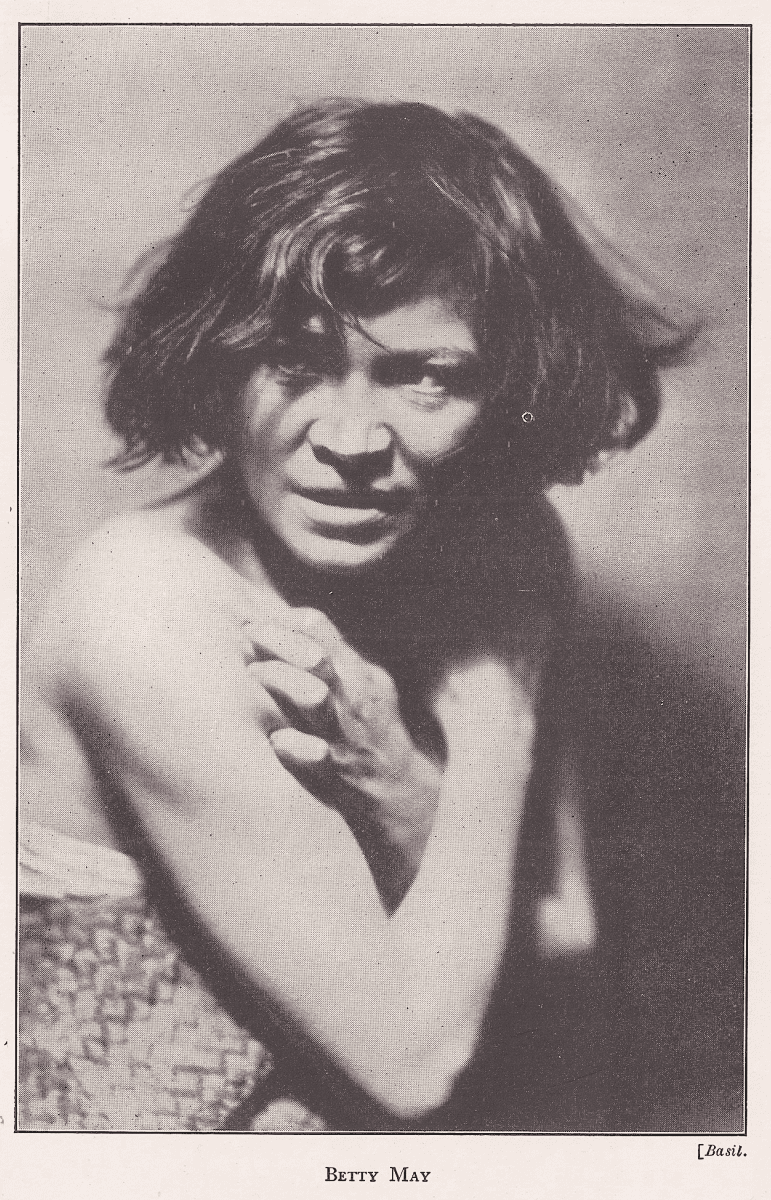
Betty May was a figure who embodied the turbulent, controversial, yet extraordinarily vibrant era of British bohemia in the first half of the 20th century. Despite her origins in deep poverty, she carved a path to the heart of London’s creative scene—first as a model, dancer, and singer, and later as a central figure in the scandals of the West End. She inspired numerous artists and writers, including Jacob Epstein, Gerald Reitlinger, and Augustus John. “I did not care what the world thought of me, and in consequence, what it did think was often not very good,” she said. “I have often lived for pleasure and excitement alone.”