

Barking Abbey is a former royal monastery, which was located in the London borough of Barking. It was also known as the most important women’s monastery in the country.
Londonka.uk will tell you more.
Early history
This monastery was built in the seventh century by St. Erkenwald (later, he became the Bishop of London). He founded this abbey for his sister, St. Ethelburga. She became the first Abbess of the monastery.
After Ethelburga’s death, her disciple Saint Hildelitha took the position.
Royal love story
Later, Saint Wulfhilda assumed the post of the monastery Abbess. King Edgar the Peaceful fell in love with her. However, she didn’t want to leave the religious life, so she rejected gifts and courtship in every possible way.
His Majesty helped the nun become the Abbess. He also transferred many estates to the monastery.
An important place
When the Normans started to conquer England, Aefgiva held the position of the Abbess of the monastery.
King William the Conqueror stayed in the monastery several times while the Tower of London was being built.
Responsibility
Given the location of the monastery, it was entrusted with the responsibility of maintaining the nearby bridges.
However, when Stratford Langthorne Abbey was founded in 1135, the Abbess of Barking transferred that obligation to the new monastery.
Elections of the Abbesses
It is worth noting that until 1214, the Abbesses of the monastery were elected only by the King. But after the intervention of the Pope, King John granted permission to the nuns to independently conduct the election of the Abbess.
Later, the King declared that each new monarch, having ascended the throne, has the right to participate in the election of the Abbess.
Thanks to this provision, the post of the Abbess was given to Alice de Belhus (when King Edward II came to the throne), Margaret Swinford (when Richard II became the King) and Maud Kylet (when the throne was passed to Henry IV).
Catastrophe
In 1377, most of the monastery’s land was flooded by the Thames.
The level of destruction was quite serious. Therefore, the monastery, unfortunately, didn’t manage to achieve a complete restoration of the possessions. The reason was the devastation of the land and the high cost of repair work. It led to the significant impoverishment of the abbey.
As of 1382, the lands of the monastery were officially proclaimed as flooded and the level of their annual income has greatly decreased.
In 1409, more than thirty years after the disaster, those lands still weren’t restored despite the fact that the monastery spent more than two thousand pounds trying to save them.
In total, the abbey lost approximately 720 acres of land.
The king repeatedly attempted to help the monastery.
In particular, he ordered workers to engage in repair work. The monarch also exempted the abbey from paying certain fees.
The issue of water supply
In 1462, John Rigby purchased the monastery’s water supply system. When another breakdown of the water supply occurred, John managed to repair it. But, in return, the abbey had to pay John every year. In fact, that could be called rent for the use of water supply.
The monastery Abbess was outraged by such a course of events. Therefore, she initiated the search for another source of water supply for the abbey.
Dissolution
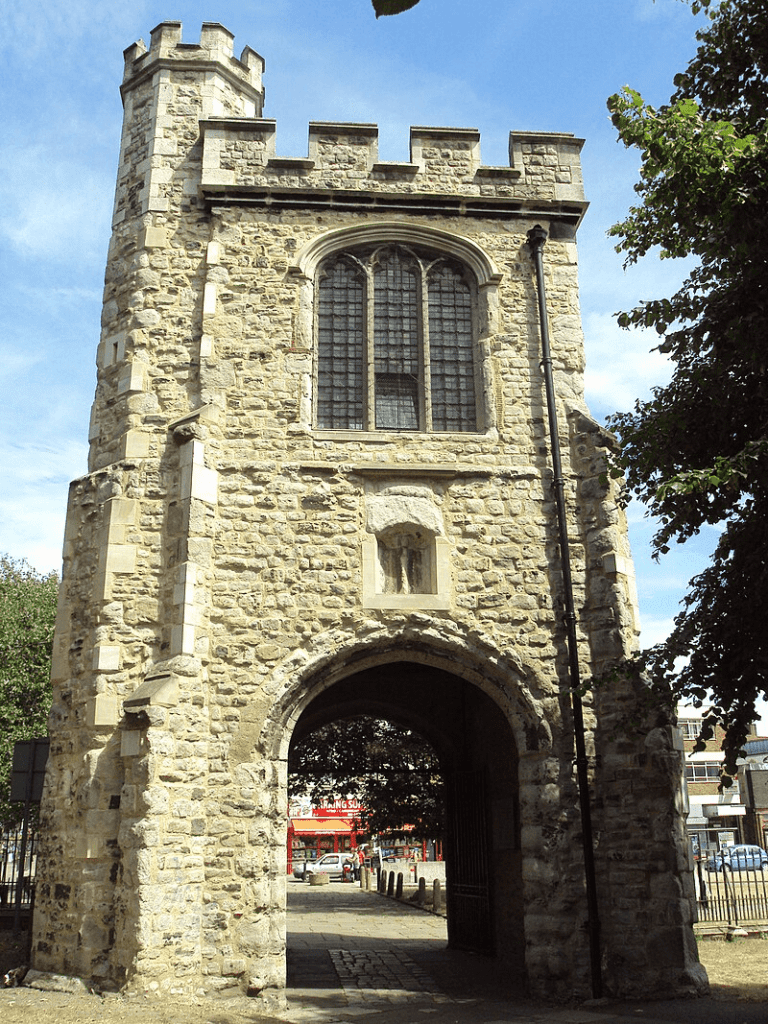
The monastery was dissolved in 1539. That happened as part of King Henry VIII’s program of the abbey’s dissolution.
After that, the monastery was demolished and most of its possessions were sold off.
It is worth noting that the process of demolishing began in June 1540 and lasted for eighteen months. Only the northern gate of the monastery and the commandant’s tower were left.
Interestingly, some of the building materials were later reused.
For example, lead was used to repair the Greenwich Palace and stone was used to build a new estate of King Henry VIII.
Photo source: wikipedia