

Women in London have always championed the right to education, the vote, and to be full partners with men. The metropolis saw peaceful campaigns and radical confrontations that swayed public opinion across the whole of Great Britain. One of the key figures in British feminism was Millicent Fawcett, who became the leader of the peaceful suffragist movement.
Fawcett served as President of the National Union of Women’s Suffrage Societies (NUWSS) and coordinated campaigns fighting for women’s enfranchisement. Her public speeches and petitions were a contrast to those of the radical suffragettes, but they were no less effective. More to come on Londonka.
Early Years
Millicent Garrett Fawcett was born on 11 June 1847 in Aldeburgh, the eighth of ten children. Her father, Newson Garrett, was a liberal who encouraged political discussion. The family enjoyed a harmonious life; her mother looked after the children, encouraging them to love physical exercise, read widely, express their opinions freely, and share their father’s political interests. Millicent entered the world of politics thanks to her elder sisters, Elizabeth and Louise. It’s worth noting that Elizabeth Garrett Anderson was the first British woman to qualify as a doctor and one of the first women elected to a school board. Her sister served as a strong role model for Millicent in terms of female activism.
In her early teens, Millicent and Elizabeth were sent to study in London at a private boarding school in Blackheath. It was there that her worldview, aspirations, and vision for the future began to take shape. While visiting her sister in London, the 18-year-old heard John Stuart Mill speak about women’s rights and equality. This topic captivated her, and she became his devoted follower. A year later, she even helped organise the collection of signatures for a petition on women’s suffrage, even though she was too young to sign it herself.
Her networking in radical political circles in London led her to meet Henry Fawcett, and despite the age difference and his blindness, Millicent married him. She supported him when he became a Liberal Party Member of Parliament, first for Brighton and then for Hackney in East London. They both enjoyed walking, rowing, and horse riding, and her husband encouraged his wife’s political and scientific pursuits.
The Steadfast Suffragist
In 1875, Millicent Fawcett co-founded Newnham College at Cambridge. This was one of the first colleges for women, reflecting the ongoing work to improve women’s access to higher education. She became a committed activist and a leading figure in the suffragist movement fighting for women’s rights. She attended marches, spoke publicly, and wrote books and pamphlets. In 1897, she was elected president of the NUWSS, which brought together 17 suffrage groups. Under her leadership, the NUWSS became an influential force in Great Britain, though it always operated within the confines of the law. Fawcett led the organisation until 1919.
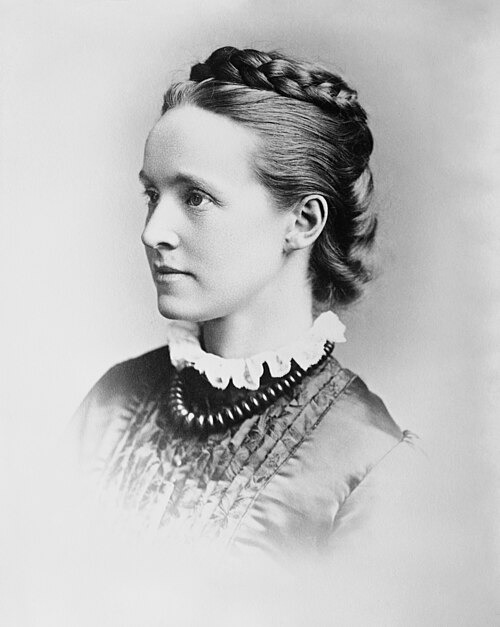
In July 1901, during the South African War, the government tasked Millicent Fawcett with investigating the British concentration camps. Her report, in the opinion of some, absolved or even refuted criticism of the camp administration. Throughout the First World War, she dedicated her organisation to ‘maintaining the nation’s vitality’. Towards the end of the war, she persuaded Lloyd George to support the 1918 bill that gave the vote to women over 30. Her weapon was peaceful tactics, such as public meetings, petitions, parliamentary lobbying, and marches, which set her apart from the radical suffragettes like Emmeline Pankhurst, who smashed windows and committed arson. She was concerned for suffragettes who ended up in prison, but she disapproved of their methods, believing the law was a more effective path.
Fawcett’s entire career was centred in London. In 1908, she organised a procession to encourage Herbert Asquith to support women’s suffrage. The women carried large banners depicting Joan of Arc, Queen Victoria, and George Eliot.
Legacy and Recognition
At the age of 71, Millicent Fawcett retired as president of the NUWSS but continued to campaign and support the development of educational opportunities for women. She also spoke out against the use of child labour. She passed away at the age of 82 after an illness. Her private correspondence, documents, and speeches are preserved in The Women’s Library archives. Her legacy lives on in the names of buildings, libraries, statues, and various public campaigns.
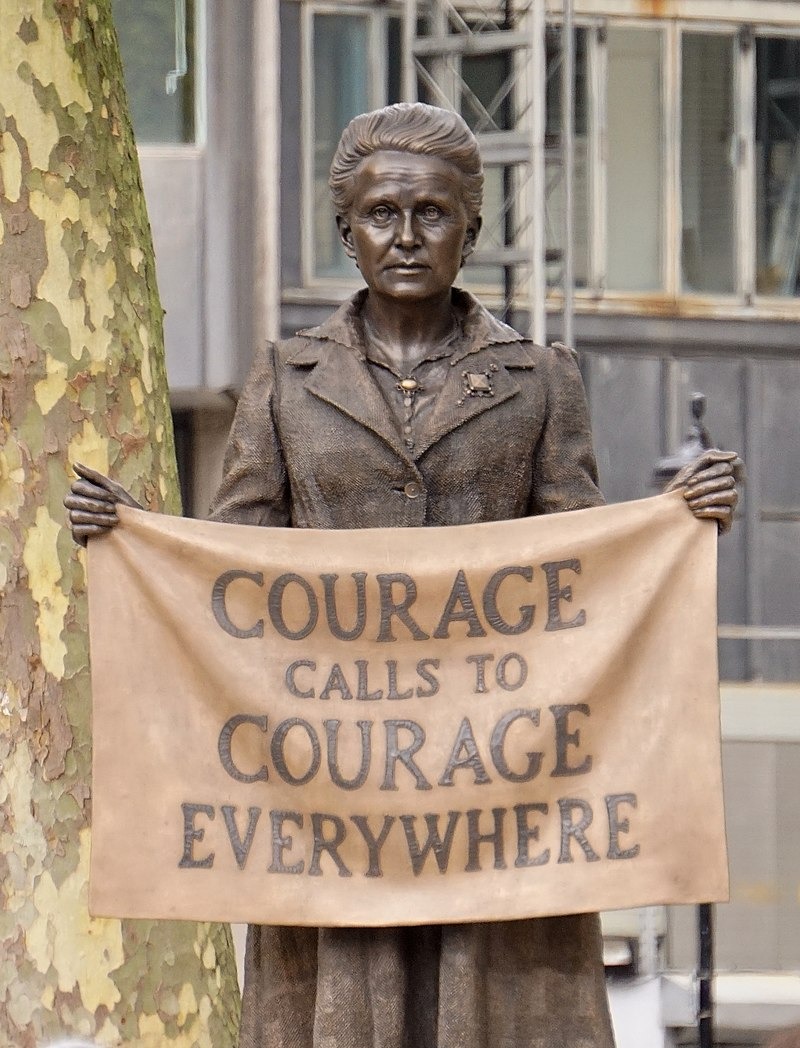
In 1929, a memorial to Millicent Fawcett was installed in Westminster Abbey. St Felix School, near her birthplace, also named one of its boarding houses in her honour. More recently, a statue of Fawcett, created by the artist Gillian Wearing, stands in London’s Parliament Square. The statue faces the Houses of Parliament, holding a banner that reads: “Courage calls to courage everywhere.”
Ultimately, Millicent Fawcett’s story is one of tenacious work and change that inspired generations of women. Her work demonstrated that change can be achieved not only through radical action but also through law and right. She became a symbol of how one individual can influence society.
Source:
- https://liberalhistory.org.uk/history/millicent-garrett-fawcett-1847-1929/?utm_source
- https://explore.britannica.com/explore/100women/profiles/millicent-garrett-fawcett?utm_source
- https://www.londonmuseum.org.uk/collections/london-stories/millicent-fawcett-suffragist-not-suffragette
- https://www.britannica.com/biography/Millicent-Fawcett