

One of the most interesting pages of the history of Great Britain, and London in particular, are the mysterious stories about witches. This is a rather unique and puzzling topic that has been the subject of scientific and amateur research at different times. We should admit the fact that every person encountered a kind of witchcraft at least once in their life. Some completely deny the existence of such mystical phenomena, while others, on the contrary, are serious about various rituals, beliefs and magic. In any case, there are a lot of preserved books, parchments, engravings and other unique manuscripts, which tell us about those famous women of London. Learn more at londonka.
Origins of witches’ history
In fact, the witches’ history is quite complicated, first of all, because of the unlike images that can be found in different sources. Some depicted them as very beautiful young ladies, who could make you dizzy and confuse your thoughts when you met them. On the other hand, people have long established an image of an old, wrinkled and ugly woman with a cauldron for cooking potions and a broom in her home. Both options can be equally accepted, which is proved by the exhibition held by the British Museum in 2015. It was dedicated to sorcery and witches in particular. Separate exhibits testified that the first mentions of witches could be found in the Bible. For example, some kings asked sorceresses for assistance in solving various issues. Ancient manuscripts presented at the exhibition also contained interesting information about such personalities. However, they depicted witches as mythical flying creatures that eat small children. Who knows, perhaps, all those scary stories about Bogeyman that our parents used to tell us came from those manuscripts.
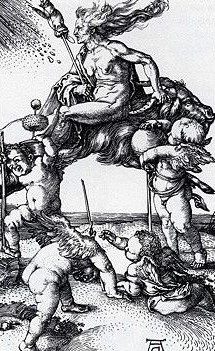
Photo source: British Museum
A more usual image of a witch was formed in the Renaissance. Then the famous artist and art theorist Albrecht Dürer singled out the corresponding stereotypical features in his works. Since then, many people began to depict either young girls with curvaceous forms or hunchbacked old women. Similar engravings can be seen in the British Museum. At that time, witches appeared on the pages of many books and in mysterious stories. After all, very often artists simply seek to reproduce their own fantasies. Such stories attract readers with their plot, evoke new emotions and allow you to plunge into a completely different world. Therefore, sometimes it is very difficult to find reliable evidence that would confirm the existence of witches.
The pursuit of London witches
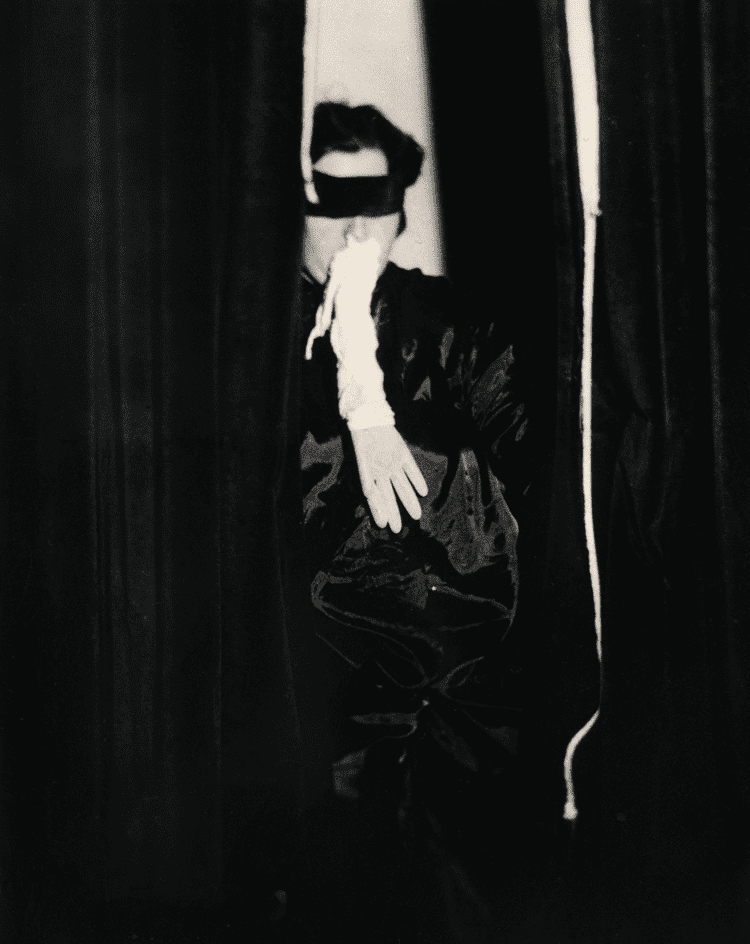
Unfortunately, London’s history is full of “suspicious” women prosecutions. Sometimes they were completely groundless and the modern reader is unlikely to understand the reasoning behind such actions. The history of the city hides many such terrible situations occurring since the 10th century. For example, a woman was drowned in London’s most famous river because she had some magical (according to the authorities) images. Moreover, her son was also convicted, but he managed to escape and become an exile. Later in 1441, Margery Jourdain was arrested, as she was accused of witchcraft and of plotting to kill King Henry. The sentence was quite cruel, the woman was burned. At that time, drownings remained popular too. The so-called witches were tied up and thrown into the river. It is also interesting that the punishments were more severe for women. Men usually received less serious sentences even given substantial evidence. All those events took place even before the official adoption of the witchcraft law by King Henry VIII. After its approval in 1541, executions became commonplace, although the trial became more formal and required evidence. The first trial in London took place in 1599 when Anne Karke was convicted as a witch. When James I came to power, the persecution continued.
London’s deathly place
The former village of Tyburn is a famous place in modern London. Thieves, robbers and, in particular, sorcerers were executed here for more than 600 years. In those days it was distinguished by the most terrible atmosphere. Unlike other similar places, there were three-sided gallows and other creepy deathly objects. It is difficult to imagine such things walking through this part of London nowadays. This location is connected with another tragic story of a witch. In 1621, the whole city was rumouring about a woman named Elizabeth Sawyer. She was convicted as a witch and it was believed that the dog Tom lured her to serve Satan. After that, Elizabeth was executed at Tyburn.
Talks with squirrels and not only
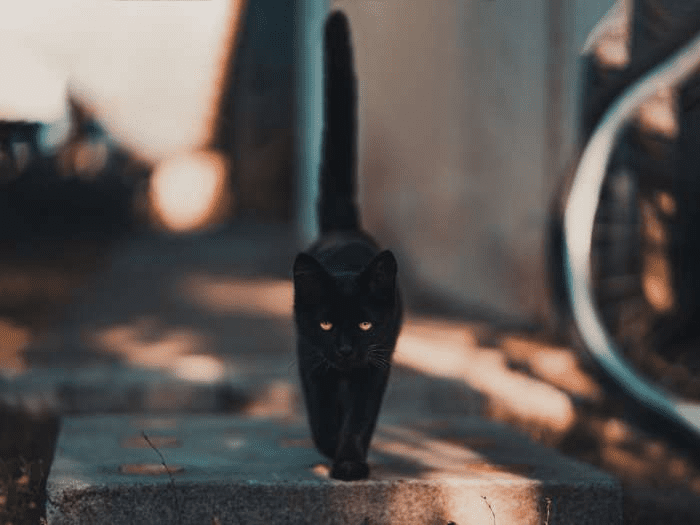
There are more interesting and unique stories about witchcraft in London, but all of them have the same sad ending. For example, in 1652, London rumoured about a witch who was considered to have special abilities. Joan Peterson was accused of poisoning people, but they also believed that she talked to squirrels, turned into a cat, and thus, scared the local baker. According to the court’s decision, it was enough to sentence the woman to hanging.
Witches of the 20th century
It turns out that sorcerers existed in London in more modern times too. The famous English writer and archaeologist Gerald Gardner was one of them. He is the founder of the Gardnerian Wicca tradition. This is a kind of spiritual direction, which is based on honouring nature. Gerald became most famous when he claimed that he tried to prevent the advance of the Nazis during the Second World War. He claimed to have used magical power on Adolf Hitler’s mind. Nobody knows whether it was true, but at least that sorcery story didn’t end in execution.
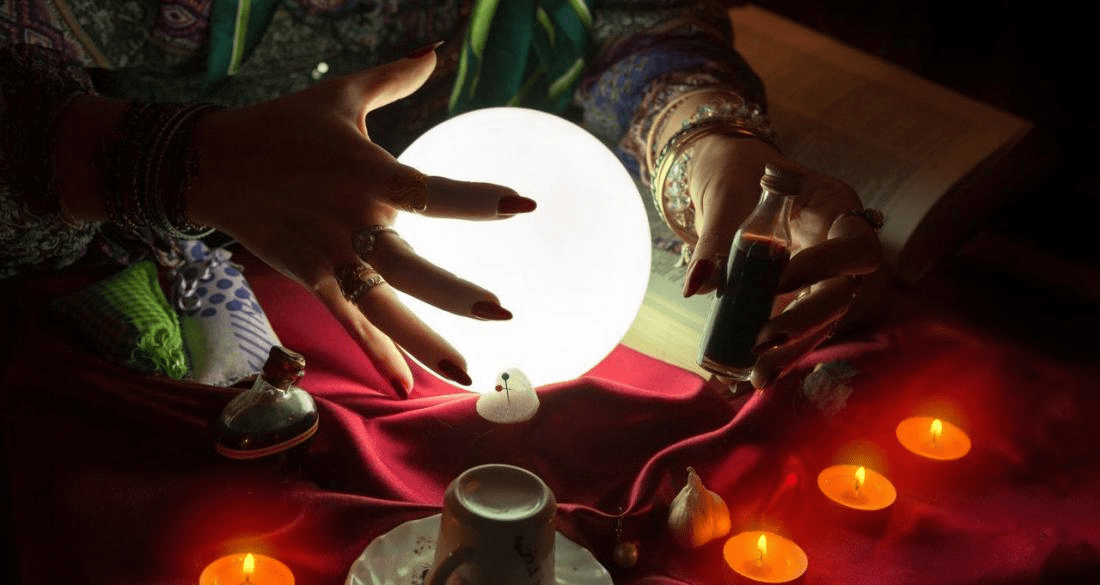
Jane Rebecca Yorke was tried under the Witchcraft Act in London in 1944. The woman was involved in fraud for several years in a row, conducting fake sessions. Nevertheless, the fact that the law approved in 1735 was cancelled only in 1951 is more interesting than the very case. Legends about the extraordinary English occultist Alex Sanders are still spreading among Londoners. He became famous for his sorcery activities in the 1960s. He liked to tell the local mass media rather unusual stories. Alex and Maxine Sanders were interested in the Wicca religion. In general, sorcerers were remembered by many as hippies performing mystical rituals. After all, it’s up to you whether to believe in their magical abilities or perceive them adequately in general.
Witches in the modern world
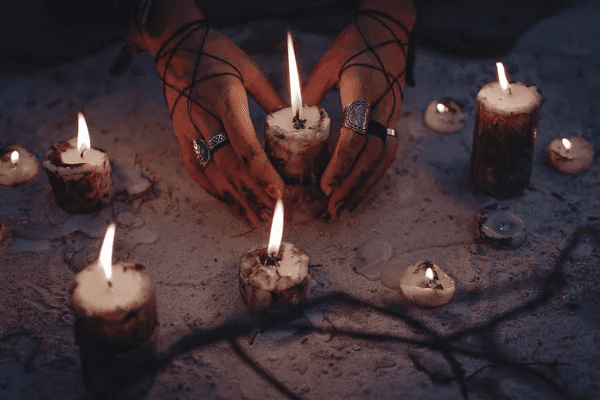
Nowadays, various religions, rituals, amulets and the like are still present in our world. However, the standards of sorcery have changed somewhat. In the modern world, such phenomena depend on personal attitude. Some people come to soothsayers, prophets and esoteric specialists, while others, on the contrary, consider it a kind of mental disorder. No matter what, it’s great that modern people don’t burn “witches” and don’t throw them into the river anymore.