

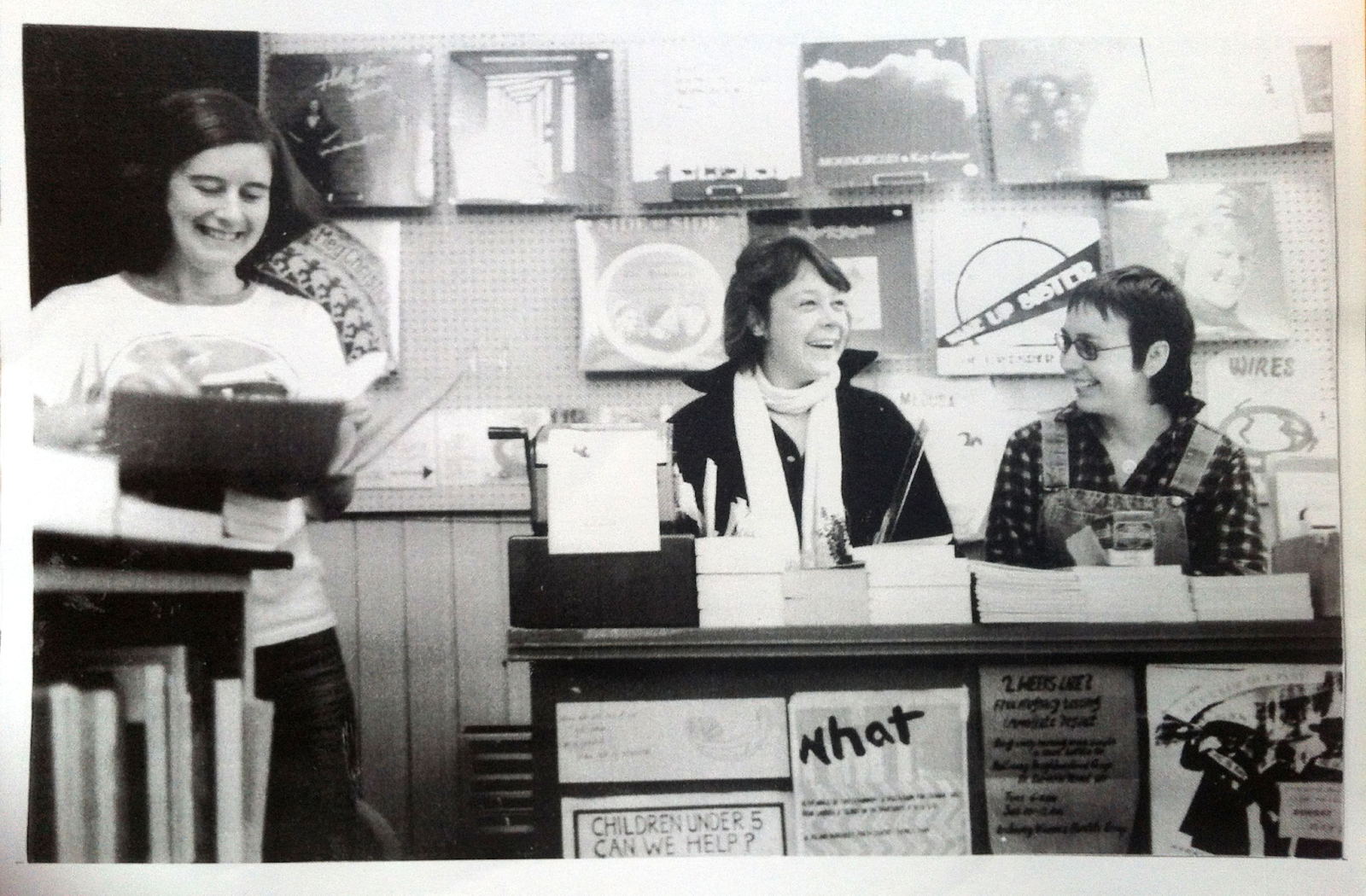
Sisterwrite was Britain’s first feminist bookshop. Founded by dedicated activists, it swiftly became an intellectual hub for the women’s movement. It was a crucible where new ideas were forged, solidarity was built, and previously unheard voices finally found a platform. Read more on londonka.
The Founding and Evolution of Sisterwrite
The journey began when Mary Coghill, Kay Stirling, and Lynn Alderson came together with a shared vision: to open an independent bookshop that would give women’s experiences the representation they deserved. In 1978, thanks to donations from enthusiastic supporters, family members, and well-wishers, they successfully raised approximately £11,000 to establish Sisterwrite in London. Interestingly, all three women were living in squats and relying on state benefits at the time. Yet, it was in these informal settings that they had been freely discussing politics, discrimination, and their aspirations, leading them to realise their ideas in this new space.
Sisterwrite’s first home was on Upper Street in Islington. From the outset, the founders decided it would operate as a worker cooperative. Their primary goal was to create not just a workplace, but an environment that respected and fostered women’s needs and development. This commitment led the co-op to implement highly progressive working conditions: a four-day working week, six weeks of annual leave, and the right to take a year’s sabbatical for study, creativity, or travel.
In 1979, the Sisterwrite space expanded with the opening of the Sisterbite café, led by Caroline Forbes. Sisterbite was intended as an accessible spot where women could relax, connect, and feel safe. Later, Frankie Green and Judith Skinner joined the team. The menu was simple but immensely popular, featuring their famous toasted sandwiches with fillings ranging from egg salad to sweet spreads. Simultaneously, Liz Trott transformed the small garden behind the café into a cosy, green oasis that became a favourite spot for meetings and discussions. While the concept of a dual bookshop-café space was later adopted by major chains, these women were the true pioneers.
By the mid-1980s, Sisterwrite underwent another critical evolution. While it had initially centred around white British women, by 1985 it transformed into a multi-racial, inclusive group. New members brought diverse cultural experiences, broadened the topics of discussion, and introduced perspectives that moved far beyond European feminism. The shelves soon featured publications on class inequality, the experiences of disabled women, issues of violence, and a significant collection of lesbian literature and political thought.
However, the early 1990s saw the mass women’s movement—the very foundation of Sisterwrite—effectively dissipate. Large book chains began to actively stock literature previously only available in specialist stores. As the mortgage had been repeatedly refinanced, the building ultimately fell into the hands of the bank. Despite attempts to survive the pressures of a recession, rising crime, and urban infrastructure problems, Sisterwrite could not withstand the strain and closed its doors on 7 August 1993.
The Legacy and Significance of Sisterwrite
Sisterwrite earned its place in history as the UK’s first feminist bookshop, ushering in a new era for the cultural and social lives of British women. One of its most significant contributions was providing a safe space for lesbian and queer women, where they were visible, valued, and respected. The staff’s specialised knowledge and their willingness to engage in deep conversations with readers were a major draw. According to the collective, demand for women’s literature tripled from the mid-1980s onwards, a clear sign that the shop’s mission had been successfully accomplished.