

The history of London is rich with figures who made significant contributions to the city’s development. Among them is Amelia Opie, a writer and humanitarian who left a lasting mark on the metropolis’s culture and history. She was a creative and energetic individual with a talent for literature and a strong sense of social responsibility. Read more on londonka.
As a novelist, her work gained considerable popularity within the upper circles of society. Opie also championed the rights of the underprivileged and was a vocal opponent of slavery. Her life unfolded during the dramatic period of the Napoleonic Wars, and her writing powerfully reflected the spectrum of ideological challenges of that time.
Life and Work
Amelia Opie (née Alderson) was born on 12 November 1769 in Norwich, Norfolk. The daughter of a physician, she had no formal education but grew up in an environment that revered literature, which inspired her own creative pursuits. After her mother’s death, she became the mistress of her father’s house and remained his close companion until he passed away.
Cheerful and attractive, Amelia Opie loved elegant clothes and had many admirers. She studied French under John Bruckner and inherited the radical political views of her brother, Judge Edward Hall Alderson.
Literary Career
In her youth, Opie wrote plays and poems and organised amateur theatricals. She wrote her first work, “The Dangers of Coquetry,” at the age of just 18, and by 1800, her writing was being published and advertised across England. In 1801, Amelia Opie completed the novel “Father and Daughter.” While critics felt it was driven by pure sentiment and pathos, its publication marked the beginning of her consistent literary output.
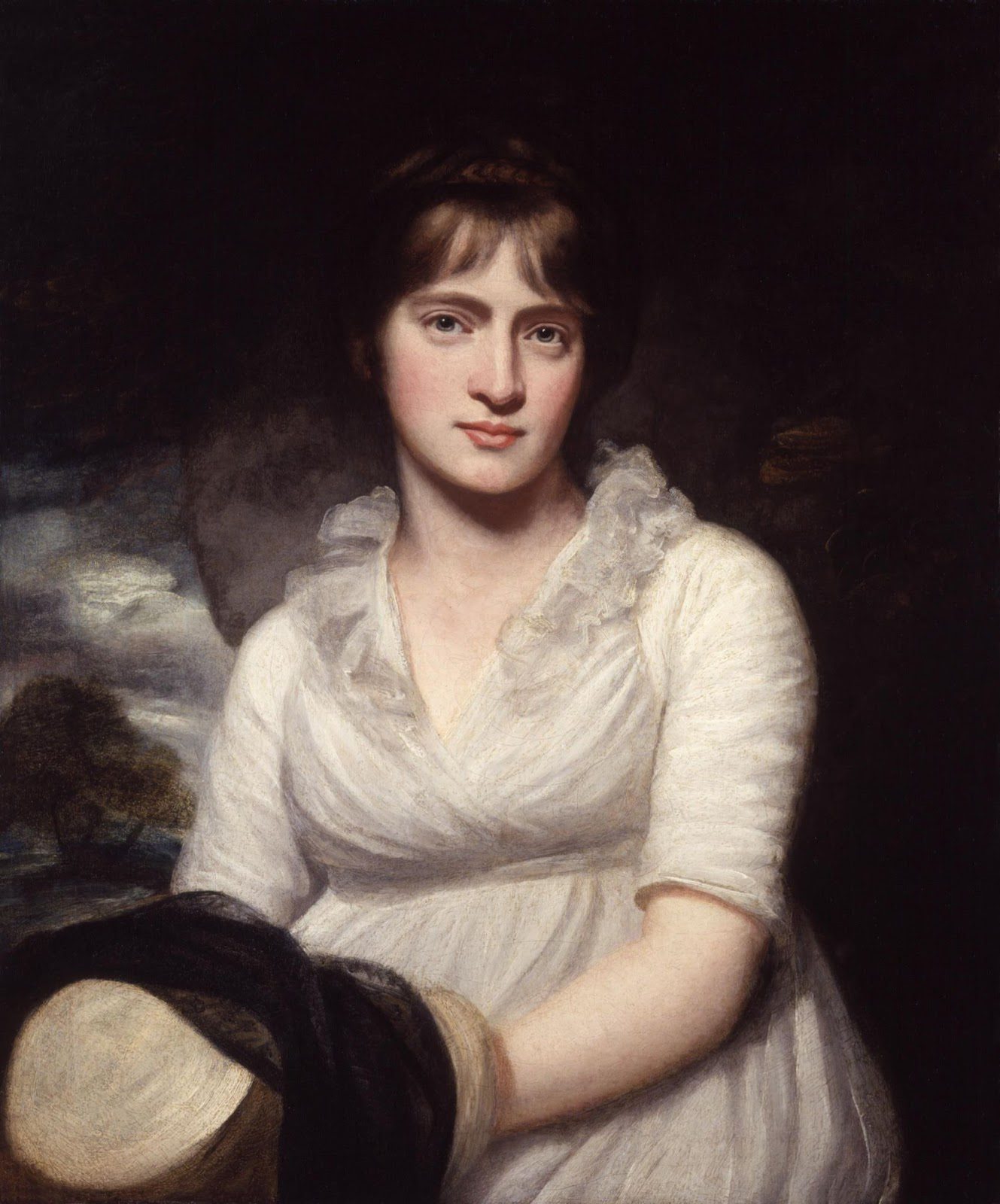
Her works often focused on morality and love and became very popular in London. She gained particular fame for her 1805 novel, “Adeline Mowbray,” a story that explored social inequality, women’s rights, and societal pressures. It was these sharp, challenging themes that made her writing so important in the literary sphere.
Notably, London became the centre of Amelia Opie’s life and work. It was there she married the painter John Opie. The city also provided a space for her self-expression, offering opportunities to meet with fellow writers and debate pressing social issues. She frequented various literary establishments and took part in a wide range of events. She also gave public readings of her work, which helped her win a large following of admirers.
The Anti-Slavery Movement
The writer was an active participant in social movements. She advocated for women’s rights and passionately supported the abolition of slavery. Following the creation of the “Birmingham Ladies’ Society for the Relief of Negro Slaves” (later the “Birmingham Women’s Society”) on 8 April 1825, Amelia Opie and Hannah Gurney founded an independent women’s anti-slavery group in Norwich. By 1831, there were 73 such women’s organisations campaigning against slavery.
Amelia was present at the World Anti-Slavery Convention held at Exeter Hall in London in 1840, but she was denied permission to be a speaker because she was a woman. Her friend Ann Knight later learned that the artist Benjamin Robert Haydon had begun a portrait of the leading abolitionists and made sure Opie was included.
Opie also worked closely with the Quakers, a collaboration that profoundly influenced her outlook on life and her dream of changing the world for the better. Her steadfast position in this difficult struggle made her a key figure in the English abolitionist movement.
Opie’s Legacy
Amelia Opie passed away on 2 December 1853 after a short illness, but she left behind a rich cultural heritage. Researchers continue to study her works today. She remains an example for many, having achieved great success and used her popularity to improve people’s lives.
Amelia Opie was more than just a writer—she was someone whose personal convictions changed history and influenced society. In London, she became a symbol of the fight for justice and equality.