

The National Union of Women Teachers (NUWT) once succeeded in uniting the UK’s female teaching community. By building a formidable professional network, the union galvanised women to fight for their rights and interests in the workplace. Read more at londonka.
The Rise and Evolution of the National Union of Women Teachers
Female educators within the National Union of Teachers (NUT) first established a Ladies’ Committee in 1896, which became a permanent body by 1900. Its membership consisted of female union staff alongside several ex-officio male members. Despite this dedicated committee, professional gender equality remained an unresolved issue across Great Britain.
The stance of the union’s journal, The Board Teacher, was particularly telling, as it openly withheld support for equal pay. Paradoxically, the Ladies’ Committee itself remained inactive regarding campaigns on this critical issue. Such passivity sparked growing frustration among the union’s more progressive members.
In 1906, the group was renamed the National Federation of Women Teachers. By 1916, it had not only mobilised a significant number of women but also faced mounting resentment over the persistent male dominance within the NUT. This tension prompted activists to prepare for a formal breakaway following the end of the First World War.
The definitive step towards independence came in 1920, when the women officially seceded to form the National Union of Women Teachers, headquartered in London. Initially, members were permitted to maintain dual membership with the NUT due to concerns about isolating those in rural areas. However, the organisation grew increasingly strict, eventually banning dual membership entirely in 1932.
The NUWT emerged as more than just a professional guild; it was a distinctly feminist organisation with a broad agenda. Its work was guided by ideological principles that reached far beyond the immediate concerns of the classroom. The union maintained strong ties with other feminist groups and key figures in the women’s rights movement. Furthermore, it engaged in wider socio-political debates, ranging from the death penalty and the minimum wage to public health policy.
Membership peaked at 8,500 in the mid-1920s, followed by a gradual decline in numbers. The organisation finally disbanded in 1961 after equal pay was successfully achieved. Following the dissolution, some activists returned to the NUT, while others joined the Association of Assistant Mistresses.
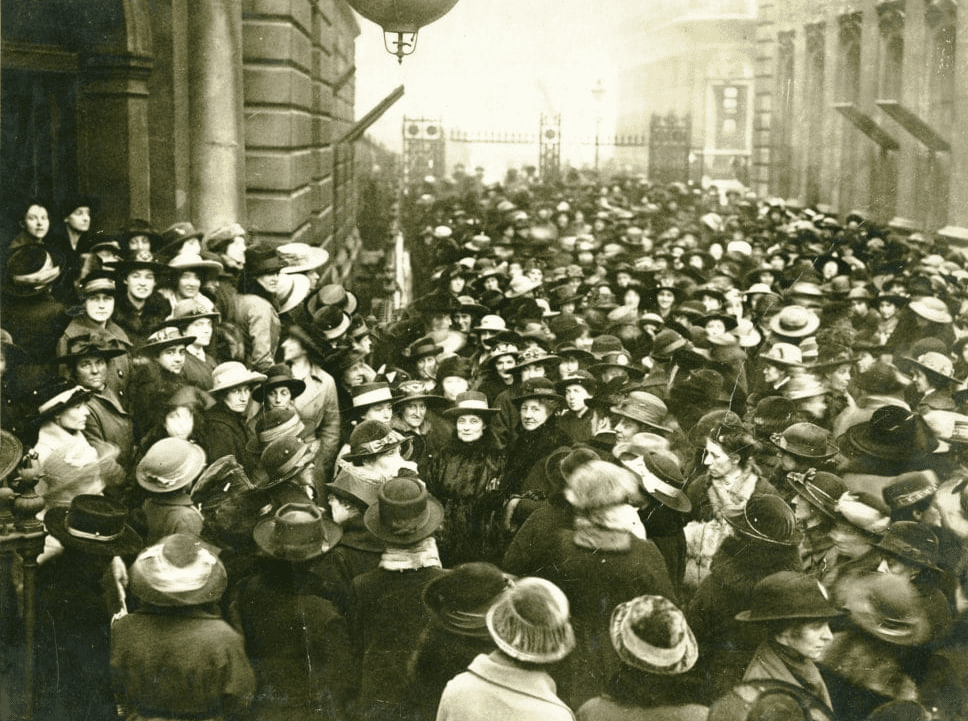
UCL Blogs
Legacy and Impact of the NUWT
For over half a century, the National Union of Women Teachers led the charge for equal pay in Britain. Key figures such as Ethel Froud, Agnes Dawson, Nancy Stewart Parnell, and Nan McMillan played pivotal roles in its growth. Those looking to explore this history of activism can turn to works like The Story of the National Union of Women Teachers, A History of the National Union of Women Teachers, and Deeds Not Words: The Lives of Suffragette Teachers. Additionally, the union’s archives are available for public research at the UCL Institute of Education.
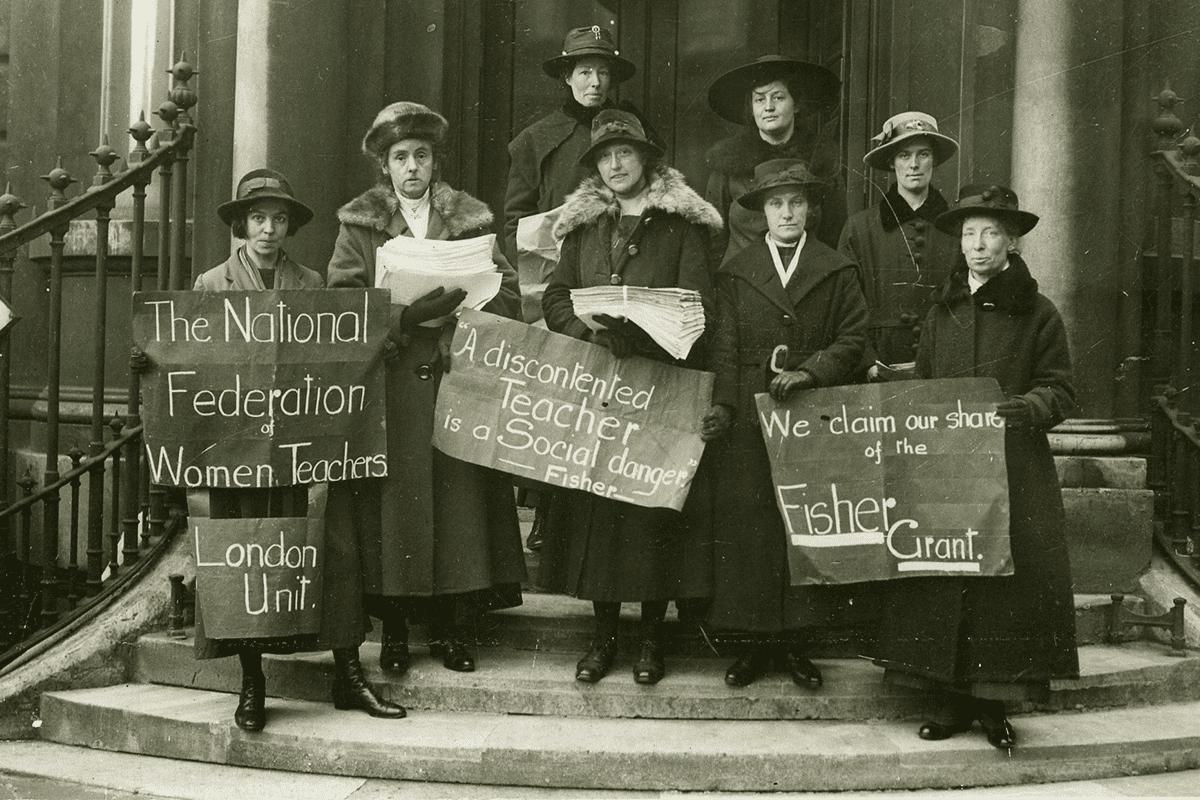
archives.ucl.ac.uk