

The most famous London love story of the 19th century is that of Queen Victoria and Prince Albert. They were married for 21 years until Albert’s untimely death. Their romance is defined by its devotion, passion, and profound impact on history.
This was not merely a marriage of convenience but a genuine love that began in their youth and endured even after one of them had passed away. It is a story of their meeting, their love, and their legacy. Read more at londonka.
The First Meeting
Victoria was the heir to the throne of the ageing King William IV, her uncle, and she was destined to become queen. She had a strict upbringing, with her every action and decision controlled. As the young princess grew older, her mother arranged with her own brother, Leopold, King of the Belgians, to match her daughter with his nephew, Prince Albert, the younger son of the Duke of Saxe-Coburg and Gotha. Such a union would ensure that power in Great Britain and several smaller European states remained within the family, and that wealth would be shared among them.
Victoria and Albert’s first meeting took place in 1836, when the Duke and his sons were visiting England. They spent around four weeks at Kensington Palace. The guests of honour also spent time at Windsor, where they met members of the Royal Family and visited the country’s landmarks with the Duchess of Kent and her daughter. In her diary, the princess wrote how much she enjoyed the company of the German prince, whom she found “very handsome.” Albert was 17 at the time. His next visit was even more exciting; dinners were followed by dances, and the pair danced together. All royal courtships attracted intense public attention and curiosity.
In 1837, Victoria ascended the throne and, at 18, became queen of a mighty empire. Still unmarried, she attracted the attention of European monarchs eager to secure an advantageous match. True feelings between Victoria and Albert sparked in 1839, when Albert was once again in London. On 10 October 1839, Queen Victoria, as the monarch, proposed to Albert herself—a highly unusual move for the time. The prince joyfully accepted.
Family Life
On 10 February 1840, the wedding took place in the Chapel Royal at St James’s Palace. The Queen wore a white dress, starting a tradition for wedding gowns that continues to this day. Prince Albert arrived at Buckingham Palace with his father and older brother. He presented his bride with a beautiful sapphire and diamond brooch. The ceremony attracted huge public attention and was marked with great pomp. It was the first royal wedding in over 100 years to take place during the day rather than late at night. As a result, thousands of Londoners gathered to see the couple as they passed through the streets. Albert had to move to Great Britain to marry Victoria, and he never lived in Germany again.
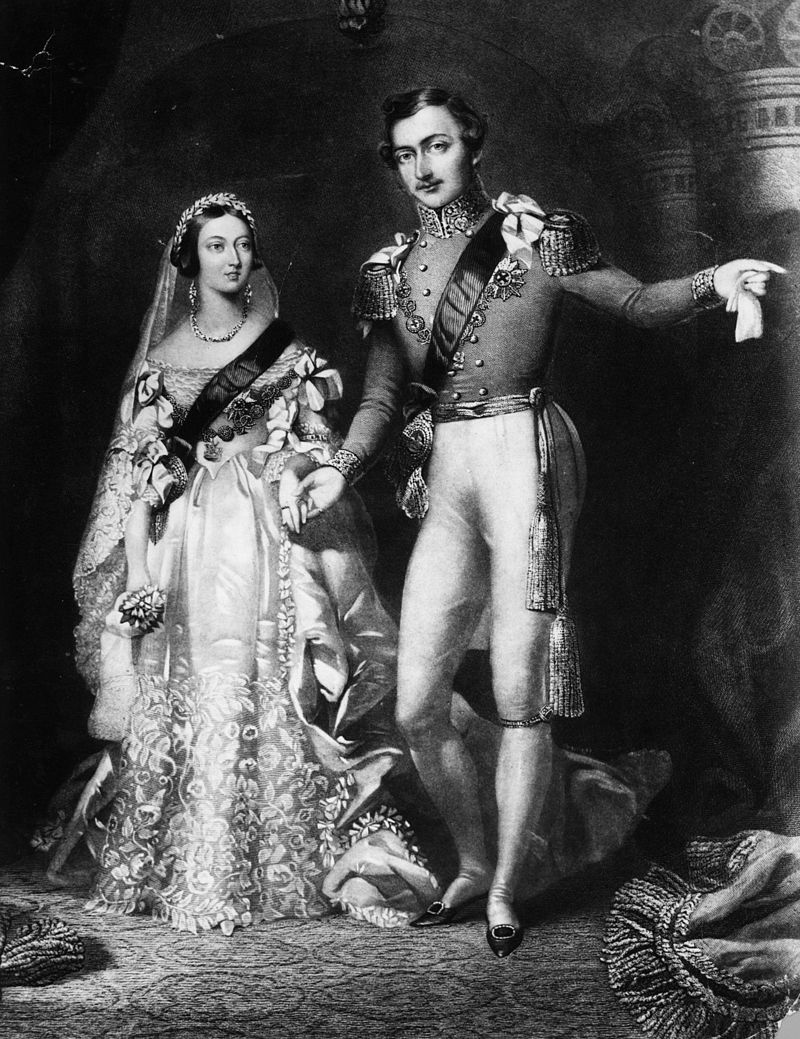
Their marriage became a model of harmony; Victoria was impulsive and emotional, while Albert was disciplined and level-headed. He also became her closest advisor, assisting her in governing the state. The couple had nine children, born between 1840 and 1857. The family was seen as an exemplar of domestic happiness and popularised traditions such as decorating Christmas trees and exchanging gifts.
Within the family, Albert became the authority on domestic matters, while Victoria was known as a dutiful wife. They often appeared in public together, including at ceremonial openings, such as that of the Crystal Palace at Sydenham in 1854. Albert also took on many of the Queen’s duties, making him a highly influential figure. By 1860, Queen Victoria relied heavily on his support.
As Albert was interested in science and cutting-edge technology, the royal household embraced many new inventions. These included the electric telegraph and electric light bulbs. They were also fond of daguerreotypes—early photographs—which were featured at Albert’s Great Exhibition in 1851.
A Family Tragedy
In 1861, Albert was diagnosed with typhoid fever, although modern historians suggest it may have been Crohn’s disease or even cancer. He died on 14 December 1861, at the age of 42. The Queen was devastated, writing that her “happy life was over.” She plunged into deep mourning, dressed in black for the rest of her life, and avoided public appearances. The Queen erected several memorials in Albert’s honour, notably the Royal Albert Hall and the Albert Memorial in Kensington Gardens. She requested that after her own death, Albert’s dressing gown and a plaster cast of his hand be placed in the coffin beside her.
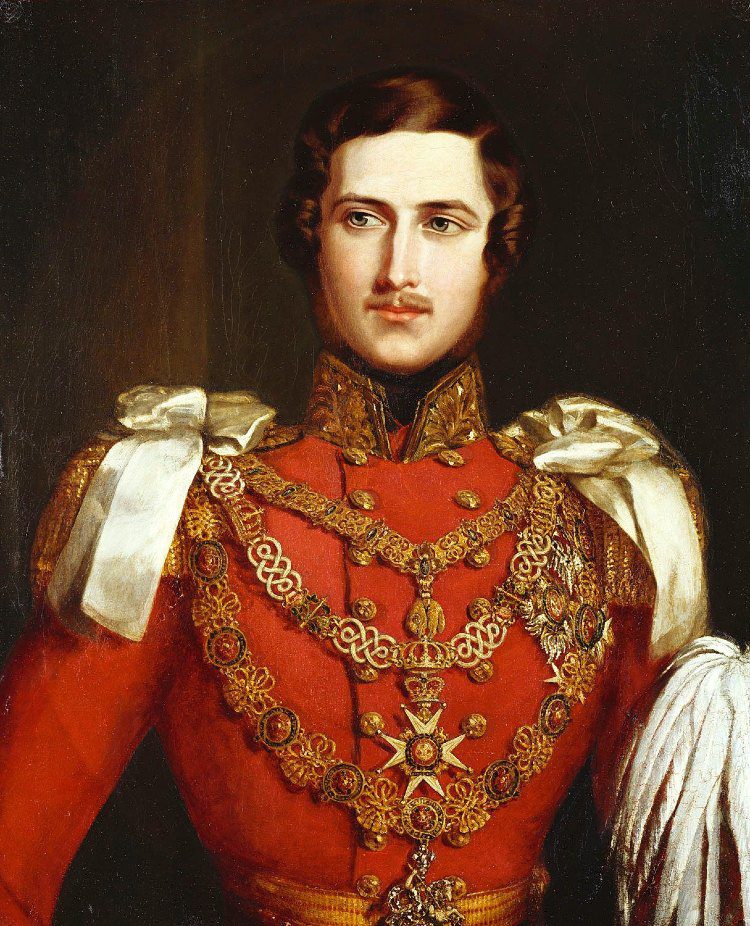
It is worth noting that Albert’s death did not end his influence. The Queen continued his projects, particularly in education and the arts. Their children married into other European royal families, thereby strengthening Great Britain’s position. The couple’s love story became a symbol of the era, demonstrating that even prominent public figures can share deep, personal feelings. Today, their diaries and letters are available in the Royal Collection archives. Victoria and Albert left a legacy not only as rulers, but as a couple who shared a powerful love.
In conclusion, the royal couple’s family and love story helped shape the nation for decades, moulding the British idea of an ideal family—one dedicated to charity and innovation. Victoria and Albert truly had a remarkable love story.