

On one hand, the Victorian era was characterised by change, reform, and progress; on the other, by social inequality and poverty. It was during this time that the Forty Elephants gang—one of the very first female criminal organisations in Great Britain—rose to prominence. By establishing control over London’s criminal underworld, they forged their own path to influence and power. Read more on londonka.
The History and Development of the Forty Elephants
In 1873, the all-female crime syndicate known as the Forty Elephants openly began its operations in London. Women from the Elephant and Castle district united to carry out theft, fraud, and blackmail. Working alongside their male counterparts in the Elephant and Castle Mob, they focused on developing organised, cunning, and sophisticated methods to achieve their goals.
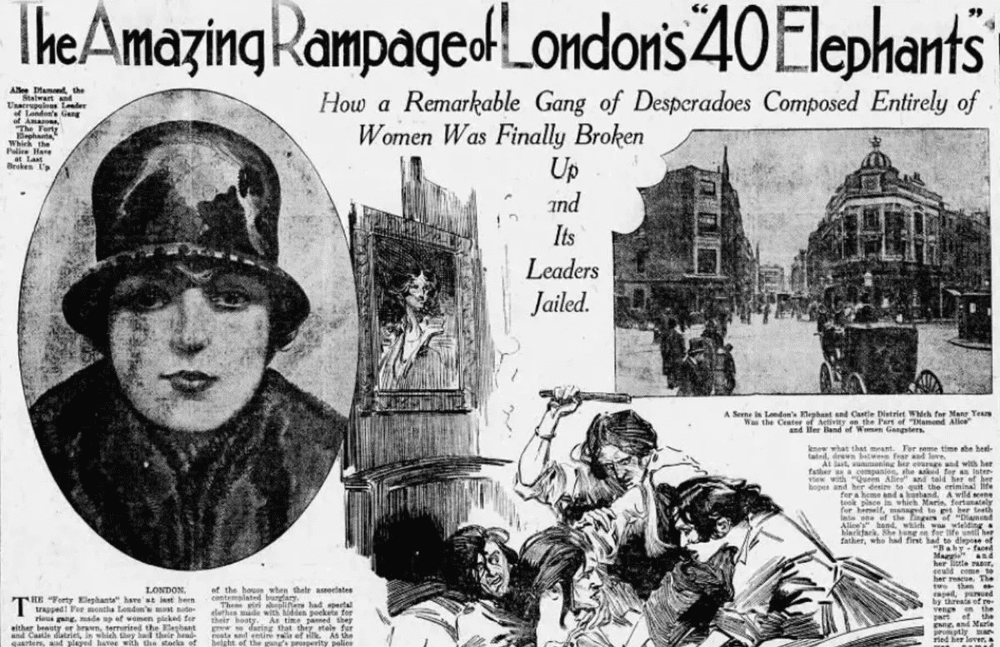
Initially, the Forty Elephants syndicate was led by the notorious robber Mary Carr. She was known for fencing stolen goods so quickly that they were impossible to trace. Showing tenacity and creativity, Alice Diamond took over the operation in 1916. In that period, working-class women had few options: they could marry, work hard for pennies, or do both. However, the new leader transformed the petty thefts of her impoverished associates into large-scale criminal operations.
Alice Diamond’s strict code of conduct forbade members of the Forty Elephants from drinking on the job, staying up late, or admitting outsiders. Their large-scale raids spread not only across the West End but also to other parts of England. At the time, Selfridges & Co was one of the first department stores where customers could browse and try on goods themselves. Although the jewellery remained under supervision, the women found ways to steal it.
Modernising their activities, the Forty Elephants invested in high-speed cars to transport their loot and escape from the police. Moreover, its members had several innovative tactics that made use of Victorian clothing. Unlike the limited male wardrobe, women’s fashion was rich with layers and accessories perfect for concealing stolen items. Another popular scheme was the “crush”: a group would cause a commotion at a jewellery counter, pass goods between them, confuse the shop assistant, and quickly disperse. Despite regular arrests, the women would simply rejoin the gang after their release.
However, the imprisonment of Alice Diamond and nine other members in the 1920s marked the beginning of the end for the Forty Elephants. For inciting a violent riot, the leader was sentenced to 18 months of hard labour. The next leader was Lilian Rose Kendall, but she was unable to save the gang from decline. After the start of the Second World War, the women met different fates: some were arrested, others moved away, and some took up positions in the newly available workforce. For her part, Alice Diamond refused to leave her home city during the wartime evacuation. After developing multiple sclerosis, she died in 1952.
London Dark Tourist
The Legacy of the Forty Elephants
The Forty Elephants syndicate remains one of the most cunning all-female gangs in British history. The limited opportunities for working-class women to earn a legal living drove them to pool their intelligence, guile, and craftiness. By using stereotypes and prejudices about their gender to their advantage, they influenced the development of organised criminal groups. Thanks to a clear hierarchy, the rapid fencing of stolen goods, and collaboration with allies, the members maintained their dominance in the local underworld. In this way, women from the poorest sections of society were able to terrorise London’s metropolitan elite for decades.
HubPages