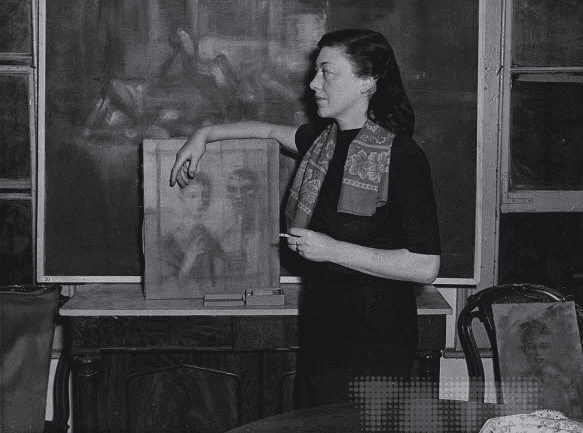

Isabel Nicholas is a figure who cannot be confined to a single genre. An artist, intellectual, and muse to prominent figures, she forged her own path in the world. Remaining true to her calling, she managed to overcome social constraints, poverty, and personal dramas. Read on at londonka.
Early Life and Bohemian Journey
Isabel Nicholas was born on 10 July 1912 in London but grew up in Liverpool. Her father was a ship’s captain who transported exotic animals to zoos across Great Britain. His premature death left the family destitute and Isabel herself with little hope of an education. However, thanks to the power of her talent, she won a scholarship to study at the Royal Academy of Arts.
Isabel Nicholas’s professional career began in the studio of the renowned sculptor Jacob Epstein. Their work together blossomed into a passionate affair, which had complex consequences for everyone involved in the love triangle. When the muse left the studio, she gifted the sculptor and his wife not only with emotional turmoil but also with a child born outside their marriage. Ultimately, she put this dramatic situation behind her and set off to Paris to pursue her art education.
Fate had a meeting in store for Isabel Nicholas with Sefton Delmer, a journalist for the British newspaper, the Daily Express. Upon seeing a bust of her sculpted by Jacob Epstein, he was so struck by the model’s beauty that he resolved to one day marry her. By a twist of fate, he stumbled upon the very woman whose image had captivated him. This encounter ended in marriage.
After the start of the Second World War, Isabel Nicholas returned to London with Sefton Delmer. During this time, her husband conducted radio broadcasts in German, posing as a supporter of the regime to carry out black propaganda operations. It is believed that Isabel also took an active part in this psychological warfare, editing anti-Nazi publications and moving in a circle of printers, spies, and journalists. Despite their shared cause, the marriage did not survive the trials of war, and the couple divorced at the end of the conflict.
The next chapter in Isabel Nicholas’s life was her marriage to Constant Lambert, the principal conductor of the Royal Opera. This union opened the door for her to the world of music and theatre. She designed sets for performances, painted dancers, and experimented with form and content. It was during this period that her unique style, which she named “Quintessentialism,” began to take shape.
From 1949, Isabel Nicholas exhibited alongside the artist Francis Bacon. They were united not only by their shared profession but also by their creative outlook and a deep affection. An openly gay man, Bacon would later confess that she was the only woman with whom he had a personal relationship. Regardless of the ambiguity of these words, the artists’ connection was an example of deep friendship, spiritual kinship, and creative resonance.
After Constant Lambert’s death, Isabel Nicholas married for a third time, to his friend, the composer Alan Rawsthorne. The couple settled in a thatched cottage in rural Essex, where Isabel spent her final four decades. Francis Bacon also lived nearby. The artist began to travel extensively—from Australia to Africa, from Greece to Italy. Her meditative paintings from this time were inspired by the quiet rhythm of country life, animals, and plants. Isabel Nicholas died, almost a recluse, in her home on 27 January 1992. A few months later, Francis Bacon—the last of her close companions to outlive her—also passed away.
The Legacy and Significance of an Adventurous Life
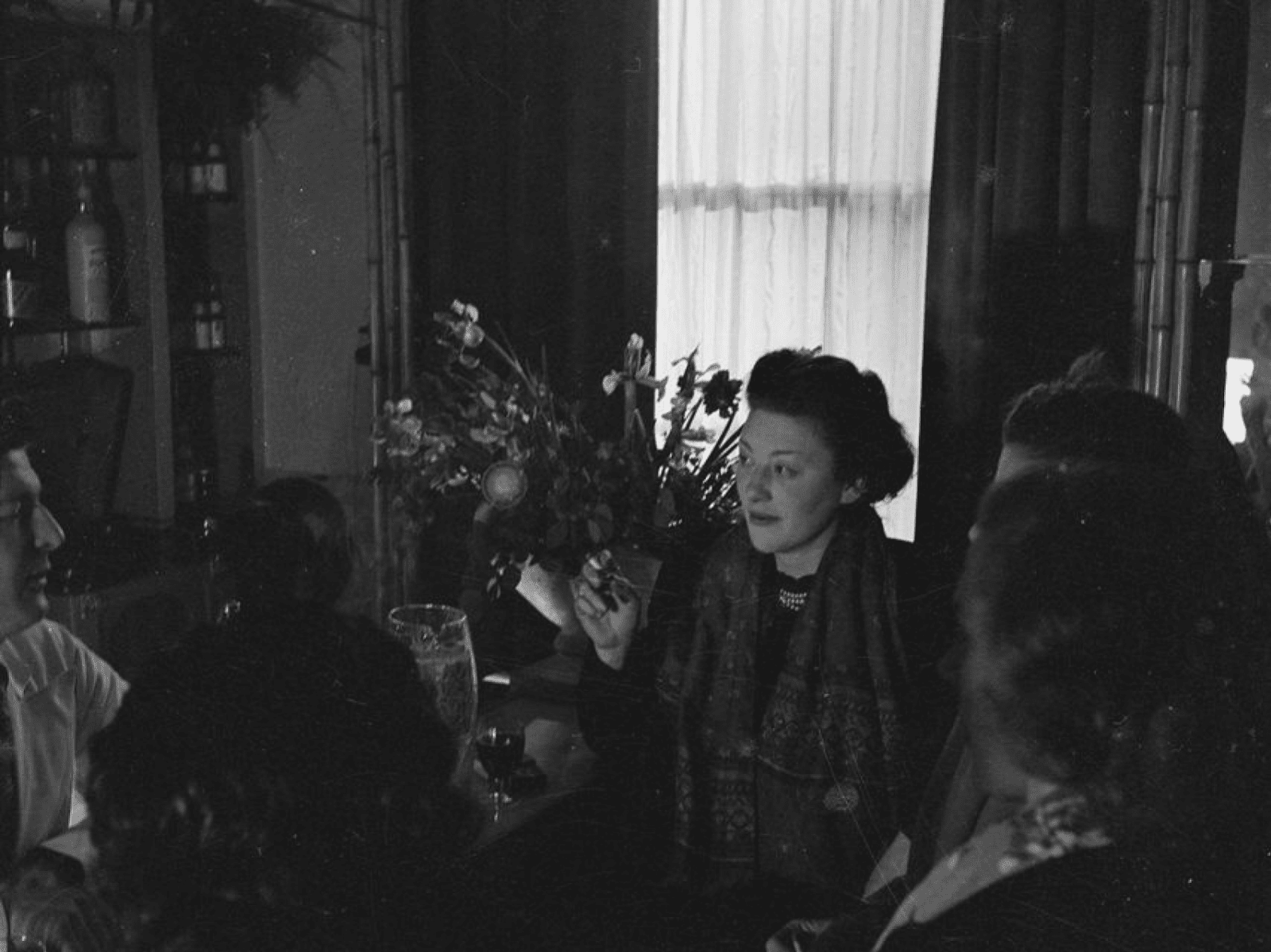
Isabel Nicholas lived an inquisitive, nomadic, and independent life. Her art was a candid exploration of the body, space, and the human inner state, balancing between the figurative and the abstract. Her style was distinguished by its meditative quality and its focus on the physical as the primary element of emotional expression. She was an active participant in intellectual discussions with philosophical leaders such as Georges Bataille, Jean-Paul Sartre, and Albert Camus. No less significant were her professional and personal connections with the great artists of the era, including Pablo Picasso, André Derain, and Alberto Giacometti.