

London’s history is full of outstanding personalities. These are famous scientists, doctors, inventors, actors, athletes and ordinary residents of the city who played a huge role in the creation and development of its history. Elizabeth Garrett Anderson is one of them. The woman was not only a prominent doctor who made a significant contribution to the development of medicine but also had intentions to get the post of mayor, which was considered quite strange at the time. She was a strong person and always defended women’s rights in society. So, what was her way to success and what motivated her not to stop and keep moving forward? Learn more at londonka.
Her childhood and family
Elizabeth Garrett was born in London on June 9, 1836, and was the second child in the family. In general, almost all representatives of the girl’s family were metallurgists. However, Elizabeth’s father was an inborn entrepreneur and at different times worked in quite profitable pawn shops. The family had many children and the girl had ten siblings. Unfortunately, there were many sad moments in their lives. In particular, the third child died at the age of six months. The parents experienced the loss of their son very painfully and moved from London to another city for a while. Later, Elizabeth’s father opened his own gardening business and the family had even more children. The parents hired a governess who taught the girl and her older sister. Later, they were sent to an independent school. It is also interesting that Elizabeth was interested in politics from her childhood. This passion was influenced by his father’s activities. No one in the family stood in the way of her hobbies, on the contrary, they encouraged such intentions. At school, Elizabeth studied French, German, and Italian, as well as English literature. Here, she became fond of reading and spent a lot of time with books. The girl was very dissatisfied that natural sciences and mathematics were not taught at the institution at all.
Professional activity and role of women in the social and political sphere
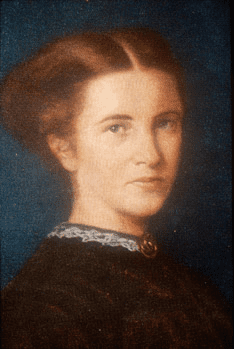
After finishing school in the 1860s, the girl became interested in medicine. Despite the refusal of many educational institutions, Elizabeth completed an internship at Middlesex Hospital in London. Eventually, after several attempts, she managed to get a diploma, which allowed her to practise medicine. Elizabeth Garrett Anderson successfully passed the exam in 1865 and became the first woman in Great Britain to receive such a right. After that shocking event, the Worshipful Society of Apothecaries immediately changed the rules, which allowed the rest of the women to obtain a licence in the same way. That decision blocked many women from medicine for a long time. From 1866, Elizabeth Garrett worked in a dispensary that provided medical assistance to poor women. In 1870, the woman received a diploma from the University of Sorbonne, which became one of the greatest achievements in her life. Throughout her professional career, the doctor founded more than one medical institution and helped many people.
A separate page of Elizabeth Garrett’s life was the struggle for women’s right to vote. In 1866, she was one of those who created a suffragist petition allowing women who were heads of households to vote. Elizabeth later joined the first British Women’s Suffrage Committee. She was also the first woman to become dean of the London School of Medicine for Women, as well as a representative of the school council and the mayor of the city. All those views and ideas were passed on to her daughter, who was even more active in the social and political sphere and spent some time in prison because of it.