

Emily Wilding Davison went down in history as a famous English suffragist. She actively fought for women’s rights in the twentieth century. She was arrested nine times and went on hunger strikes more than five times. However, all this didn’t break her or deprived of the main idea of women’s freedom.
Londonka.uk will tell you more.
The beginning of her story
Our heroine was born in the south-eastern part of London on October 11, 1872.
At the age of thirteen, Emily became a student at Kensington High School. In 1891, she entered Royal Holloway College. There, she actively studied literature.
After the death of the father, Emily’s mother couldn’t afford her daughter’s education anymore.
Therefore, Emily began to work as a governess and studied in the evenings.
Later, the girl managed to raise money to enter St. Hugh’s College, Oxford. She was very successful in her studies and was awarded several times. However, she never managed to get a higher education, as academic degrees were not available to women at that time.
The following activity
Then, Emily worked at the church school during 1895-1896. After that, she worked at one of the private schools. In 1898, she took up tutoring.
In 1902, the girl entered the University of London and finished it in 1908.
The organisation membership
In the autumn of 1906, Emily became a member of the organisation represented by the Women’s Social and Political Union. This organisation aimed at providing women with the right to vote.
As a result, Emily decided to fully dedicate herself to the organisation.
The first arrest
In March 1909, Emily Davison was arrested for the first time. She and twenty-one other women decided to organise a march, demanding to meet Prime Minister H.H. Asquith. However, it ended in a scandal and Emily was arrested. The reason was that she attacked a policeman while he was on duty.
Then she received a monthly imprisonment.
The following imprisonments
In the summer of 1909, Emily was arrested a second time. Then she and other feminists interrupted the meeting, in which women were forbidden to participate. She was sentenced to two months in prison. But Emily went on a hunger strike, which led to her early dismissal.
In September 1909, Emily was arrested again because she threw stones at the venue of a political rally. Only men participated in those meetings. After that, she was sent to prison, but due to her hunger strike, she was released earlier again.
In October 1909, Emily was arrested when she tried to stone Lloyd George. But the man in the car was Walter Runciman, one of the contemporary Ministers. After her release, Emily appeared at a political rally and started throwing stones at Runciman. Then she was not only arrested but also sentenced to correctional labour.
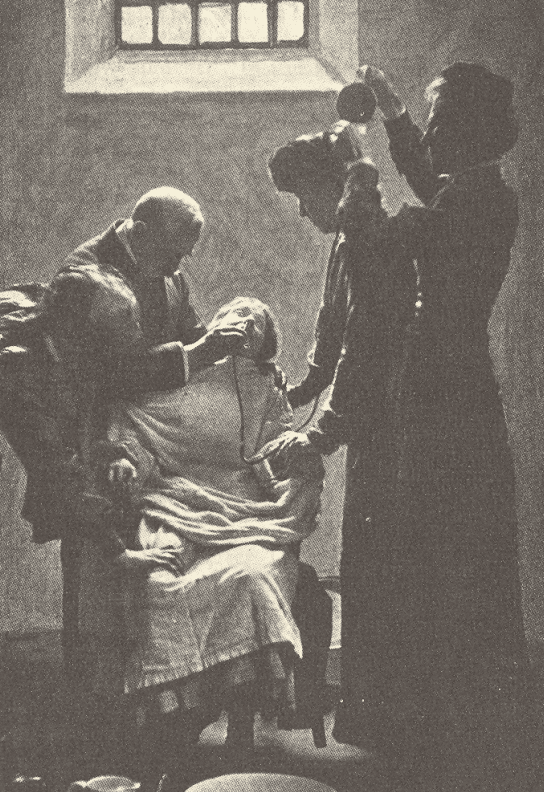
This time, despite Emily’s hunger strike, she was not released. Instead, they began to force-feed her.
The tenacious woman
However, Emily turned out to be unbreakable, and after the first attempt at such feeding, she decided to barricade herself right in the cell, using a stool and a bed. Therefore, the prison representatives couldn’t get inside. They broke one of the cell’s windows and directed a water hose at the prisoner. That was the only way they could get to the camera.
From that moment on, Emily was forced to eat.
Later, she sued the prison representatives. In January 1910, she got forty shillings as a moral compensation.
House of Commons
In the spring of 1910, Emily decided to sneak into the House of Commons and ask members about women’s suffrage.
Then she was arrested again but wasn’t imprisoned.
Fraudulent initiative
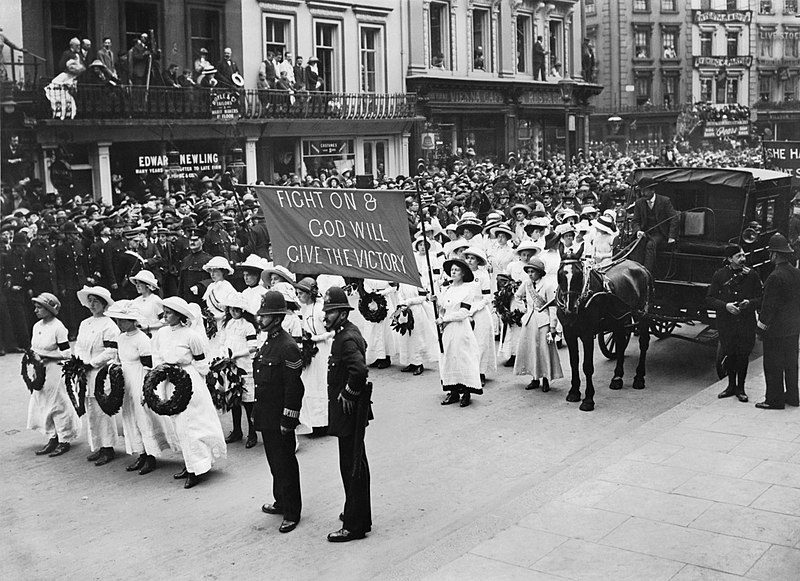
It is worth noting that in 1910, a group of deputies was engaged in the development of a draft law that would provide the right to vote to a million women. The only condition for women was the presence of property. The aforementioned Union was very pleased with this course of events and even stopped holding scandalous protests.
However, in November 1910, the bill was rejected. Asquith’s Liberal government broke a promise to give Parliament time to debate the bill.
Feminists’ discontent
After that, the Union delegation of three hundred women wanted to draw up a corresponding petition. They were stopped by the police.
Then feminists called that day Black Friday. They complained actively about attacks, most of which were of sexual character.
Despite the fact that Emily was not arrested, she was very indignant at that course of events. Therefore, in a few days, she broke the windows of the Crown Office in Parliament. As a result, she was arrested and sentenced to a month’s imprisonment.
Emily went on a hunger strike and suffered force-feeding again.
A new tactic
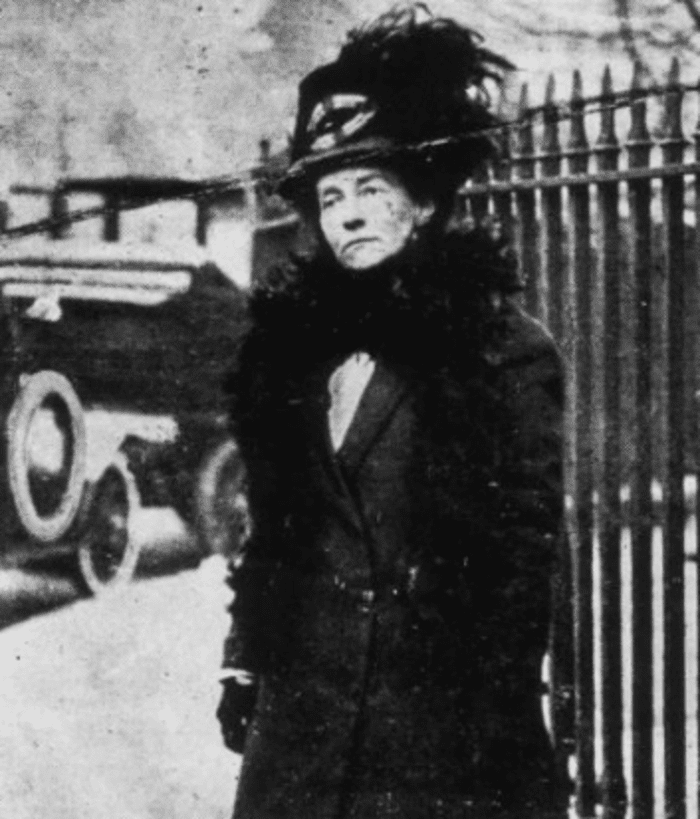
In December 1911, Emily changed her tactics and decided to set mailboxes on fire. She was arrested for setting fire to a mailbox near the Parliament. Emily was sentenced to six months in prison.
That time, despite the fact that the feminist didn’t go on hunger strike, she was force-fed in prison in advance. Ahead of Emily’s plans, so to speak. In addition, her physical health worsened.
However, Emily and her suffragette cellmates decided to barricade themselves and go on a hunger strike.
Then the cell door was broken down and they were force-fed.
After that, referring to the lack of strength to undergo terrible torture, Emily jumped out from the prison balcony.
As a result, she received a severe head injury and two broken vertebrae. Despite her injuries, she was force-fed and returned to her cell.
Disapproval from the Board
It is worth noting that the burning of mailboxes was not authorised by the Board of the Union. As a result, Emily lost the favour of the organisation.
Later, representatives of the Union’s Board reported that they tried in every way to stop Emily from such drastic and dangerous actions. But she continued and didn’t need any official instructions at all.
The last arrest
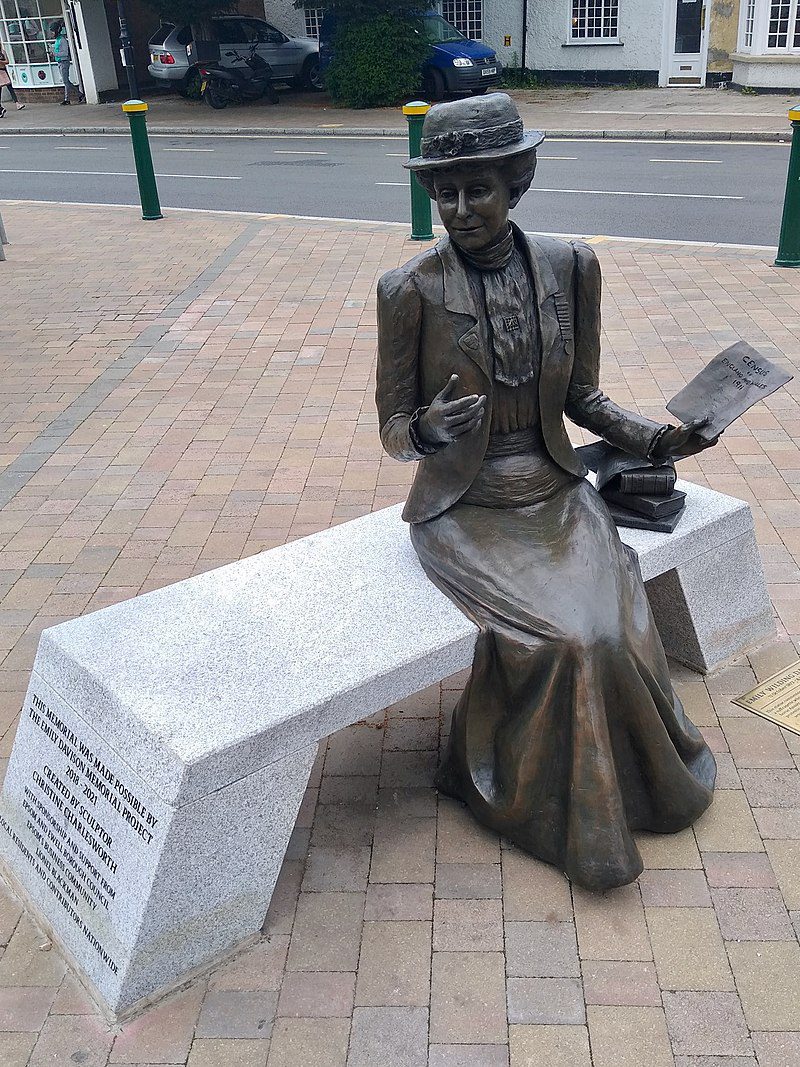
In November 1912, Emily Davison was arrested for the last time. She attacked one of the Baptist priests, confusing him with Lloyd George. She was sentenced to ten days in prison but was released earlier after a four-day hunger strike.
A fatal accident
On June 4, 1913, Emily took the flags of the suffragettes and went to Epsom to take part in the Derby.
As the race began, Emily ran into the middle of the arena with the feminist flag. She stood in the way of Anmer, King George V’s horse, whose jockey was Herbert Jones.
The collision caused Anmer to topple over and fall, with the jockey’s leg caught in the stirrup.
Emily fainted and fell down too.
Those present tried to help Emily and Herbert. Later, they were both admitted to one of the local hospitals.
In a few days, Emily underwent surgery. However, she didn’t recover. The forty-year-old feminist died due to a fracture of the skull base.
Photo source: wikipedia.