

In London’s distant past, strict rules governed the roles of men and women. The sight of a woman in a white coat seemed an impossibility for the time, yet it was in this very city that Sophia Jex-Blake—a woman who shattered stereotypes and opened the doors to the world of medicine—began her career as a doctor.
As one of Great Britain’s first female physicians, she not only obtained a medical education in the face of discrimination but also established a school in London that would provide a profession for countless women. Her life was a story of battling prejudice, perseverance, and dedication to her ideals. She devoted herself to teaching medicine to women and was an active campaigner and defender of women’s rights. Read on at londonka.
Early Life and Education
Sophia Jex-Blake was born on 21 January 1840 in Hastings, England, into a wealthy family. Her father was a lawyer, and her mother raised their three children with religious strictness. From a young age, Sophia had a rebellious nature and dreamed of an education, which was atypical for women of that era, who were expected to fulfil the role of a good wife and mother. She wanted to earn her own money, but her parents opposed their daughter’s decision. She was determined to find her calling in medicine, but many obstacles stood in her way.
In 1858, Sophia Jex-Blake enrolled at Queen’s College, London, where she studied mathematics and worked as a tutor. This experience gave her an opportunity to immerse herself in the world of medicine. In 1865, Sophia travelled to the United States to learn more about women’s education. There, she met Elizabeth Blackwell, the first woman doctor in America. This meeting finally inspired Sophia to overcome all barriers and become a physician herself.
Two years later, along with Susan Dimock, a trainee from the New England Hospital for Women and Children, she wrote to the president and fellows of Harvard University, requesting admission to the university’s medical school. She received a reply stating that the university did not provide for the education of women. The following year, she planned to enrol in a new medical college founded by Elizabeth Blackwell in New York, but Sophia had to return to England following the death of her father.
The Fight for Medical Education
Sophia Jex-Blake was determined to obtain a medical degree in Great Britain and believed that at least one university would allow women to study. In 1869, she applied to study at the University of Edinburgh, which was the most prestigious in the country. Her application was rejected on the grounds that she was the only woman interested. Subsequently, together with six other women, known as the “Edinburgh Seven,” she successfully fought for the right to attend lectures. The women proved they could compete on equal terms with men, which only increased the hostility towards them. Their studies were met with protests from male students and educators. The “Surgeons’ Hall riot” of 1870 became infamous, when a mob pelted the women with mud and hurled abuse at them.
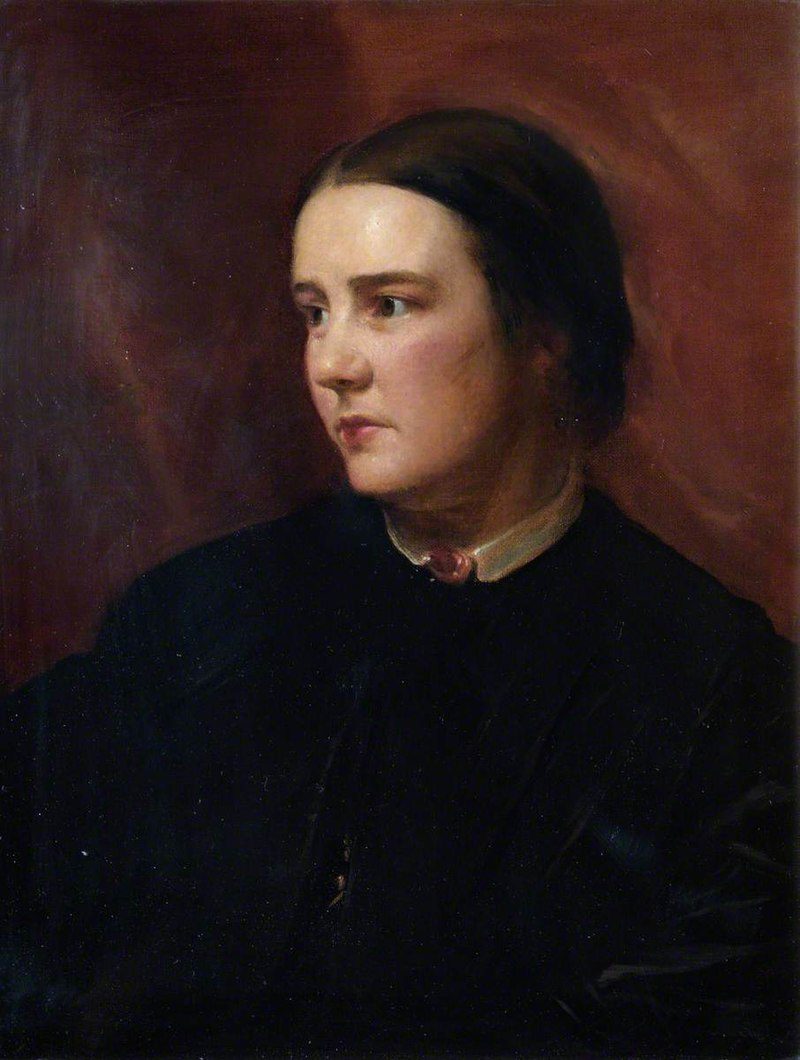
These events made newspaper headlines, and the women gained supporters, but representatives of the medical faculty convinced the university to refuse to grant them degrees. In 1874, Sophia went to Switzerland and finally obtained her medical degree. Upon her return to Great Britain, she passed the exams at the Royal College of Surgeons of Ireland and, in 1877, became one of the first women to be officially recognised as a doctor.
Founding a Medical School
In London, Sophia Jex-Blake started a private practice, treating women and children. In 1874, along with Elizabeth Garrett Anderson and other co-founders, she established the London School of Medicine for Women (LSMW). It was the first educational institution in Great Britain where women had the right to receive a medical education. Sophia taught there and sought benefactors to support the project.
The LSMW faced many difficulties, as medical associations were unwilling to recognise women’s qualifications, and hospitals would not allow them to practise. In 1886, she founded the Edinburgh Hospital and Dispensary for Women and Children, but her main work remained focused in London. During this period, Sophia met Margaret Todd, one of the first students at the Edinburgh school. They lived together and were particularly close friends. Their relationship was not public, but it was rumoured that they were partners.
Sophia Jex-Blake was also an activist in the women’s movement. She fought for women’s right to education and employment and collaborated with suffragettes. Her primary goal was her work in medicine, and she always insisted that women had the same rights as men.
Legacy
In 1899, Sophia Jex-Blake unexpectedly decided to end her medical career and return to Sussex. She died on 7 January 1912, leaving behind a significant legacy. The University of Edinburgh honoured her memory with a plaque at the entrance to its medical school. In 2019, the University of Edinburgh posthumously awarded degrees to the “Edinburgh Seven,” recognising their contribution. In London, the doctor’s name has been commemorated on several memorial plaques. University College London has also established the Sophia Jex-Blake Chair of Physiology.
Ultimately, Sophia Jex-Blake was not just a doctor but a symbol of faith and struggle. She managed to change people’s perceptions of women’s roles, careers, and achievements, proving that persistence can overcome any obstacle. Her work paved the way for British women to become doctors.