

From its inception, the Women’s Social and Political Union (WSPU) grew into a pivotal movement in the fight for women’s suffrage in Great Britain. One of its distinguished members was Dora Bidham, a nurse and activist. Witnessing the lives of the poor and destitute, she focused not only on medical care but also on driving political and social change. Read more on londonka.
Early Life and Activist Journey
Dora Spong was born on 3 June 1879 in London. She grew up in the family of Frances Elizabeth Scott and James Osborne Spong, who managed the manufacturing company Spong & Co., known for its mechanical kitchen devices. Following her mother’s example, Dora and her sisters began practising vegetarianism at a young age.
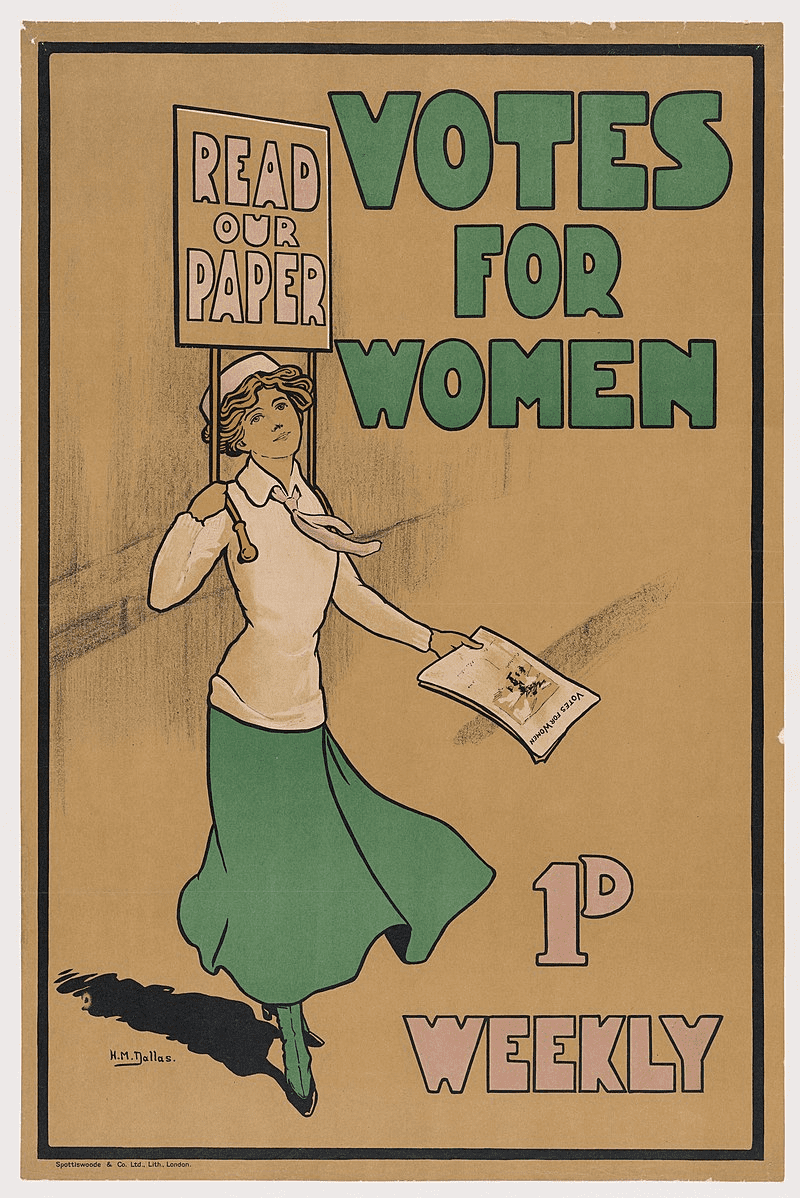
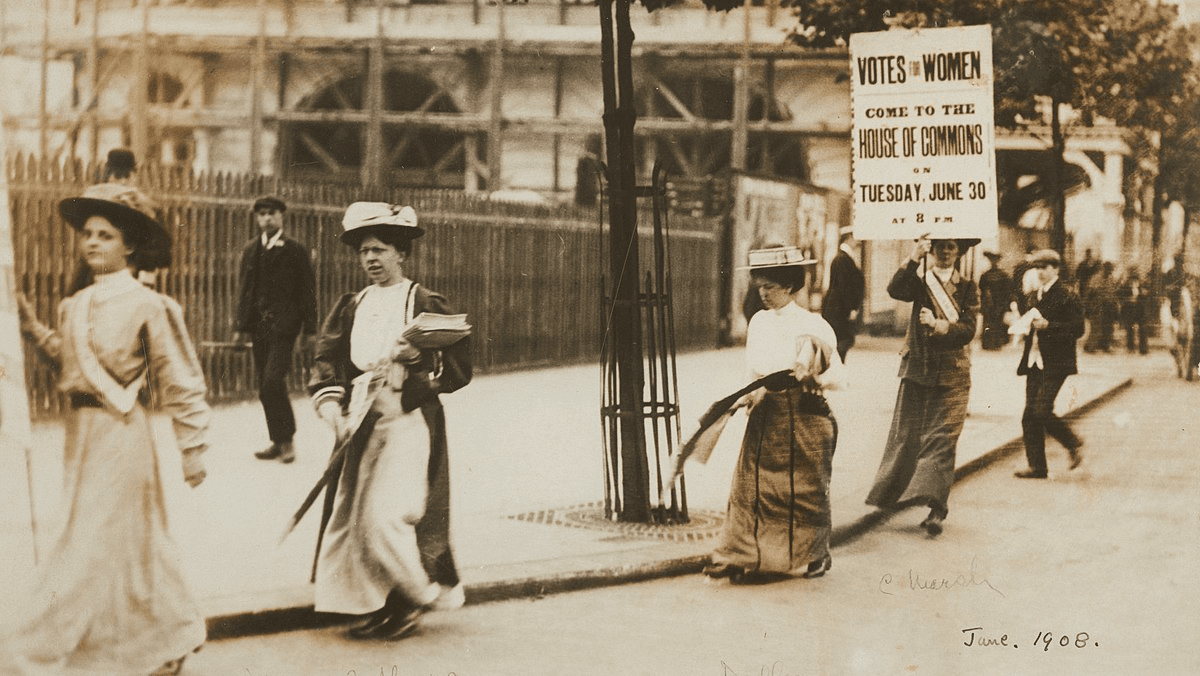
Dora Spong’s professional life began as a nurse and midwife in impoverished London districts such as Tottenham and Battersea. Seeing the urgent need for social reform, she became a member of the Independent Labour Party. In 1908, the activist joined the Women’s Social and Political Union. From then on, she became an active participant in peaceful protests for women’s rights. By distributing posters and publications, members of the movement drew public attention to the issue of gender inequality. This form of protest was less provocative, which reduced the risk of aggression from opponents.
Soon after, the WSPU organised a march to the House of Commons. A force of 1,700 police officers attempted to maintain order among a crowd of 10,000 people who had gathered to oppose the suffragette movement. Dora was among the 75 people arrested and, on 1 July 1908, was sentenced to a month in Holloway Prison. Despite being convicted of disorderly conduct, she was released early due to deteriorating health. She found herself behind bars once again with other activists who marched on the House of Commons on 12 July 1909.
To further her qualifications, Dora began training as a midwife in June 1910. In October of that year, she married the well-known British engraver Ralph John Bidham, with whom she raised two children. Protesting against another delay of the women’s suffrage bill, she joined the “Black Friday” suffragette demonstration. The protesters were subjected to physical and sexual assault by police and male bystanders. Dora was arrested again but was later released without charge.
In 1911, Dora Bidham was one of the signatories of a petition to Victor Bulwer-Lytton, 2nd Earl of Lytton, which expressed gratitude for his contributions to the fight for women’s suffrage. In 1912, she broke windows at a post office in Westbourne Grove, for which she was sentenced to two months of hard labour in Holloway Prison. She moved with her family to Hendon in 1920, and then to Finchley in 1936. She passed away on 9 January 1969 in Woking.
Wikipedia
A poster for the Women’s Social and Political Union
Legacy and Significance of Dora Bidham’s Activism
Dora Bidham played an important role in both the suffragette movement and the medical field in Great Britain. While providing care to the poor and disenfranchised, she realised that social change was necessary not just in medicine, but in political and public life as well. She began an active educational campaign, explaining to the public the importance of political participation for women. The activist also demonstrated immense courage during marches on the House of Commons, in acts of protest like window smashing, at demonstrations in support of her fellow campaigners, and during her time in prison. Her endurance was honoured with the “For Valour” medal from the Women’s Social and Political Union.
Wikipedia