

In the late 19th century, women in Great Britain became increasingly active in confronting social inequality. Before long, militant acts and hunger strikes became a necessary part of the suffragettes’ struggle for the right to vote. The work of Gertrude Ansell, an activist and entrepreneur, is considered a vital component in securing the vote for women in the United Kingdom. Although her physical strength was tested time and again, her spirit remained unbroken until the forced silence of her sisters was finally over. Read on at londonka.
Early Life and Activist Journey
Gertrude Ansell was born on 2 June 1861 in London. She was the third child and only daughter of the chemist and inventor George Frederick Ansell. In 1856, he took up a position as a clerk at the Royal Mint. After being forced to leave his profession, he passed away on 21 December 1880.
Following her father’s death, Gertrude Ansell established a successful printing bureau. As she developed her business, she came to believe that equal political rights were essential for improving the economic standing of women. This conviction led her to join the Women’s Social and Political Union (WSPU) in 1906. The next year, she took part in the Mud March, a peaceful demonstration in support of women’s suffrage. After joining a raid on the House of Commons in 1908, she was sentenced to one month in Holloway Prison.
Concerned with animal welfare, Gertrude Ansell also became a member of the Society for the Protection of Animals and Against Vivisection in 1909. She went on to become one of the organisers of the International Anti-Vivisection and Animal Protection Congress. While continuing her work with the WSPU, she pledged to these new organisations that she would refrain from participating in militant activities.
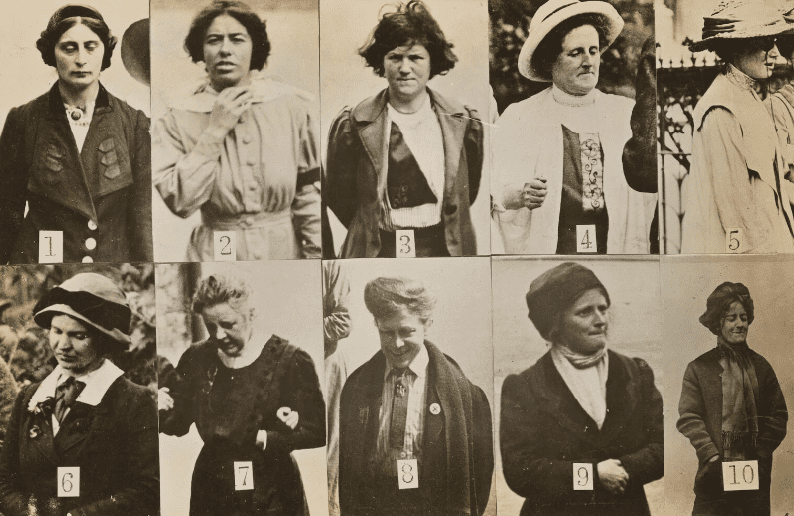
However, in the summer of 1913, Gertrude found herself back in prison for a month after breaking a window at the Home Office. That autumn, she was arrested again while selling “The Suffragette” newspaper at Holborn tube station. Determined to avoid more time behind bars, she went on a hunger strike and secured her release. On 12 May 1914, she visited the Royal Academy of Arts and attacked Hubert von Herkomer’s portrait of the Duke of Wellington with a hatchet. A six-month prison sentence immediately followed, which she again protested with a hunger strike. She was force-fed 236 times before being released under the general amnesty for suffragettes at the beginning of the First World War.
During the global conflict, all militant suffragette campaigns were halted. In the peace that followed, only some women, including Gertrude Ansell, won the right to vote. It would be another ten years before all women could participate in elections. The activist’s life came to an end at Saffron Walden Hospital on 7 March 1932, due to complications following gallbladder surgery. She left her estate to the children of her brother, the solicitor Jay Ansell.
National Portrait Gallery
Legacy and Significance of Gertrude Ansell’s Activism
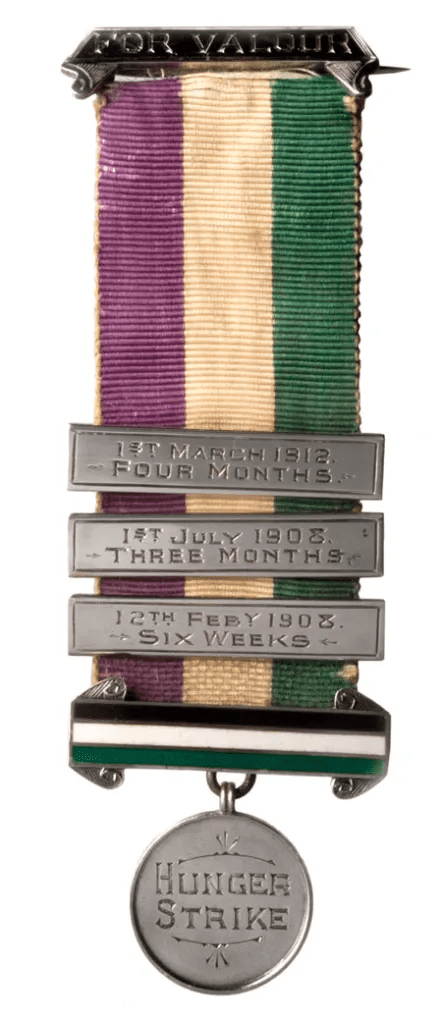
Gertrude Ansell made a significant contribution to the fight for women’s and animal rights in Great Britain. When peaceful demonstrations, rallies, and public events proved ineffective, she repeatedly turned to hunger strikes, acts of protest, and vandalism. As a result, she was forced to sacrifice her freedom and health in the face of the authorities’ suppression of suffragette activities. However, the combined efforts of these women ultimately brought an end to centuries of social and political inequality. For her bravery, Gertrude Ansell was awarded the Hunger Strike Medal by the Women’s Social and Political Union.
Essex Record Office Blog