

The history of London can boast of the pronounced feminist movement. Women fought for the right to defend their own position, the right to education and equal relations with men. An outstanding figure in this regard was Eleanor Rathbone, who made a great contribution to feminism. She was a public figure and a pioneer in family allowance. Learn more at londonka.
Her interesting life story, courage, confidence and determination attract and inspire women. Eleanor Rathbone was an independent Member of Parliament and a supporter of family allowance and women’s rights.
Childhood and youth
Eleanor Rathbone was the daughter of social reformer William Rathbone VI. She was born in 1872 and spent her childhood in Liverpool. Due to her father’s political activities, the girl met various politicians from an early age and listened to their conversations. Her parents encouraged her to pursue social work. She was educated at home and then attended Kensington High School in London. Later, she entered Somerville College, Oxford. She also took Classics lessons from Lucy Mary Silcox, although her parents opposed that. From her childhood, she was interested in famous feminists and social reformers of the time, such as Millicent Fawcett and Josephine Butler, who influenced her worldview.
In 1894, she became one of the founders of the Associated Prigs, the informal name of a women’s discussion group that met on Sunday evenings. The established relations became useful after the women left Somerville. Eleanor Rathbone had always been interested in the topics of inequality and social justice, so her further activities were focused on the feminist movement.
Beginning
In 1909, Eleanor Rathbone became the first woman elected to Liverpool City Council. She used her position to campaign for social housing, better working conditions for women and their right to vote. In 1919, she succeeded Millicent Garrett Fawcett as president of the suffragette organisation, the National Union of Societies for Equal Citizenship (NUSEC) and moved to London. She and her companion and fellow social reformer Elizabeth Macadam lived at 50 Romney Street. They moved to Tufton Court in 1940 after their former house had been badly damaged by bombing.
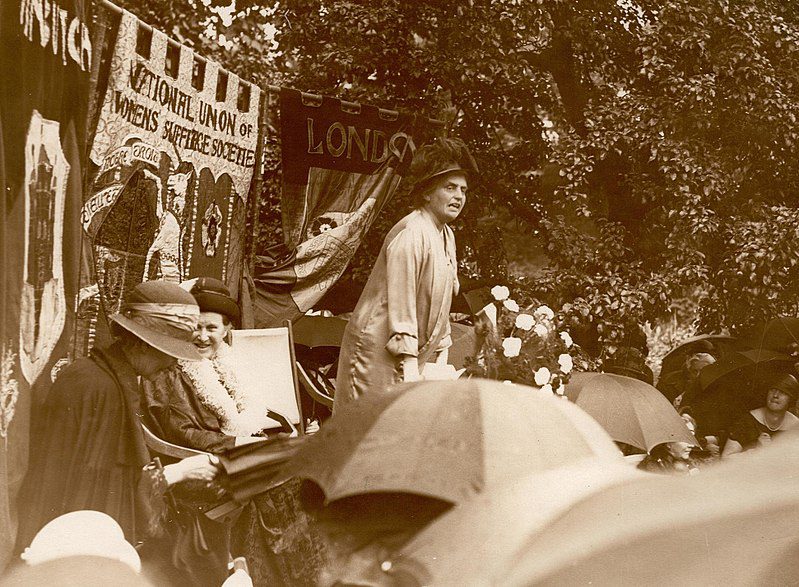
Under Rathbone’s leadership, the NUSEC achieved significant successes in its activities, including the introduction of widows’ pensions in 1925 and women’s suffrage on an equal footing with men in 1928. Eleanor’s promotion of the new feminism, which emphasised the integral complementarity of women and men, led to the resignation of half of the committee in 1927. Over time, the NUSEC lost influence, but Rathbone later found a new place for her election campaign.
It is worth noting that the woman advocated peaceful methods of struggle, in contrast to the radical feminists of the time. She believed that changes would be possible only through peaceful negotiations and gradual reform. Already in 1929, the woman was elected an independent Member of Parliament from the Combined English Universities. She became the most influential member of the House of Commons and worked until her death. She advocated for women’s rights not only in London but also in other cities and countries and was one of the first to oppose Nazi Germany openly.
Struggle and social reform
After the declaration of war on Germany, Rathbone organised the Town Hall Soldiers’ and Sailors’ Families Association, now known as SSAFA, which supported the wives of volunteer soldiers. After the war, widows were left without money to live on, so she began to advocate for a system of family benefits. Her proposal was to pay female mothers a family allowance, which would provide financial support for families. Eventually, her plan for family benefits was included in the Family Allowances Act of 1945.

Eleanor Rathbone focused on social reform. She worked at the London City Council, where she sought to improve working conditions for the working class and advocated for the support of women. The reformer helped bring women’s issues to the forefront and was the only woman in Parliament. She managed to keep her position and prevent Conservative MPs from expelling her.
Personal life
- At the end of the First World War, Eleanor Rathbone and Elizabeth Macadam bought a house in London.
- Her study of classical literature, combined with her experience in social work, motivated her to abandon religion. She believed that the basis of ethics was caring for others.
- Eleanor Rathbone’s brother was actor Basil Rathbone and her nephew was John Rankin Rathbone, the Conservative Member of Parliament for Bodmin.
- A year before her death in 1945, Rathbone helped pass the Family Allowance Act.
- In 1986, the Greater London Council installed a plaque in her honour at Tufton Court, Tufton Street, Westminster.
- The photographs of Eleanor Rathbone and her supporters are on the plinth of the Millicent Fawcett statue in Parliament Square, London, which was unveiled in 2018.
- The University of Liverpool has commemorated the activist with the Eleanor Rathbone Building, which houses the School of Law and Social Justice and the Department of Psychology.
- Edge Hill University called a hall of residence in honour of Eleanor Rathbone as recognition of her work as a social reformer.