

Great Britain, and London in particular, is known all over the world thanks to its writers. Thanks to the variety of stylistic genres, manner of writing and other creative features, many of them have gone down in history and remain extremely popular even nowadays. Their literary works impress the modern reader with their relevance and their biographies are captivating. One of them is Virginia Woolf, whose creative output is characterised by innovation and emotionality. She lived an eventful life and her novels are quite popular even nowadays. Learn more at londonka.
Childhood and the first interest in literature
Virginia Woolf was born in London on January 25, 1882. Her parents were typical representatives of the Victorian era. The girl got interested in literature thanks to her father who was a prominent literary figure and the first editor of the Dictionary of National Biography. Therefore, the girl knew a lot about this form of art. As soon as she learned to read and write, she started writing her own little comic family stories. Her inspiration came during summer vacations, which her family always spent out of town. Thus, little Virginia learned the difference between life in the city and outside, winter and summer, restrictions and freedom as well as fragmentation and integrity. However, soon, her life seemed to be put on pause and the established cycle was destroyed. When the future writer was 13 years old, her mother died. Then the girl had her first nervous breakdown. Despite the difficulties in the family, she returned to writing in several years.
Creative activity
Virginia Woolf is one of the leading novelists. Stream of consciousness became her main writing style. Her professional activity began in 1900. A little later, she anonymously published a literary work in the form of a journalistic report. Her first novel, The Voyage Out, was much more interesting. It was published in 1915 and remains quite popular in the modern world. In 1927, Virginia Woolf wrote one of her most famous novels, To the Lighthouse, in which she mentioned important issues to many Britons. The novel Orlando: A Biography was published in 1928. It is one of the easiest works to understand. In general, there are many more interesting novels in Woolf’s creative output.
The role of feminism in Virginia‘s life and writing
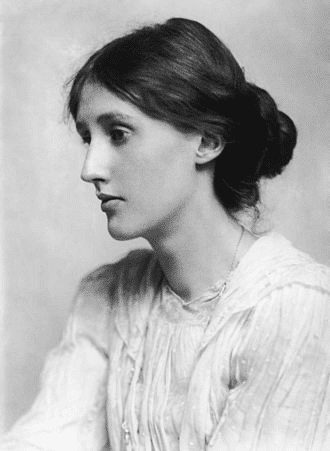
Virginia Woolf is often called an icon of feminism and there are some reasons for it. The historical period of her life was filled with cardinal changes, which took place not only in London but also throughout Europe and many other countries of the world. The struggle for women’s rights became one of the driving forces. At that time, this movement was supported even by representatives of the working class. Therefore, women writers and journalists considered it their immediate duty to cover that topic. It would be surprising if that tendency passed through Virginia Woolf’s work without leaving an imprint. Thus, feminist and lesbian motifs can be found in many of her works. In her novels, she raised questions about women’s role in society, the disproportionately greater economic and legal power of men, the main difficulties faced by women writers of the time, the future of women’s education, as well as the consequences of industrialisation. Such works became the foundation for many modern studies on the topic.