

London has always been a centre of style and fashion. This applies not only to tailoring and clothing but also to stylish haircuts and hair adornments. The city’s hairdressing trade has a rich history, illustrating the changes that unfolded in London over centuries. From medieval barbers to modern high-fashion salons, it has become a vital part of the fashion industry.
A hairdresser is a professional who works with a client’s hair. It is one of the most ancient professions, dating back to the ancient Egyptians and Greeks. In times past, hairdressers were known as barbers right up until the 20th century, and their art has only become more refined with each passing year. Read more at londonka.
The History of Barbers
In medieval London, hair care was closely linked to barbers, who handled not just haircuts and shaves but even tooth extractions. After clergy were forbidden from practising medicine, barbers, who were already skilled with sharp blades, added minor surgical procedures like treating wounds or pulling teeth to their services. In 1308, the “Worshipful Company of Barbers” was established to regulate the quality of services and the training of craftsmen. At that time, barbers gave men simple haircuts and shaped their beards, which were fashionable. Women generally styled their own hair, adding feathers and ribbons. Wealthy Londoners employed private barbers who could create complex hairstyles for special events.
In the 16th and 17th centuries, wigs became extremely popular. Thanks to Charles II, who started the trend for large, curly wigs, they became standard wear for men. This led to a boom in wig-making, and London’s barbers had to open new workshops on the Strand and in Westminster, crafting elaborate wigs from horsehair or human hair. During this period, the wealthy often hired French hairdressers, who brought new hair decorations and styling tools—which had to be heated over a fire—to London.
Barbers lost their medical duties in 1745 when the barber-surgeons officially separated from the hairdressers. From that point on, hairdressing became a distinct profession.
A New Fashion
At number 71 St. James’s Street stands the oldest barbershop in the world. Its story began in 1805, when an entrepreneur named William Francis Truffit decided to try his hand as a barber and perfumer. Wigs were already falling out of fashion, with trends gradually shifting towards shorter hairstyles. Barbershops, such as those on Bond Street, began offering shaving and haircutting services to the middle class. The fine haircuts at Truffit’s shop became very popular, and he was regarded as an excellent master of his craft. The most famous figures in London came to him, including Winston Churchill, Oscar Wilde, and Frank Sinatra, among others.
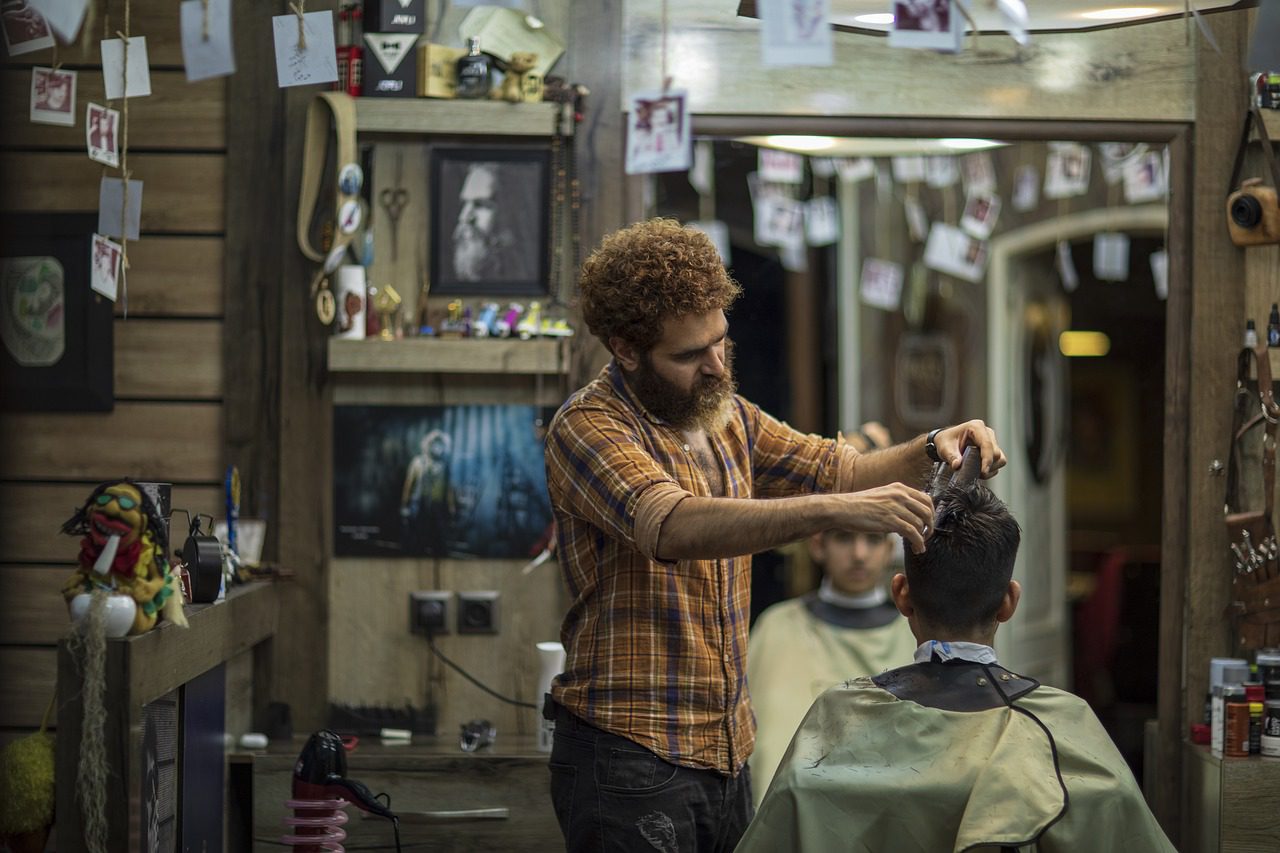
Women also began to visit hairdressers occasionally, although most styling was still done at home. At the time, London’s “The Lady’s Magazine” published instructions for creating various hairstyles. This also helped to popularise the hairdressing trade.
Hairdressing for All
The Industrial Revolution in the 19th century transformed the hairdressing trade in London. Specialised salons emerged, catering to both men and women. Eugene Suter, a Swiss immigrant, opened a fashionable women’s salon in London’s West End. He told clients he had visited Paris and was an expert in style and fashion. He introduced the electric permanent wave. This technology, known as the “Eugène wave,” revolutionised the industry, allowing for the creation of long-lasting hairstyles.
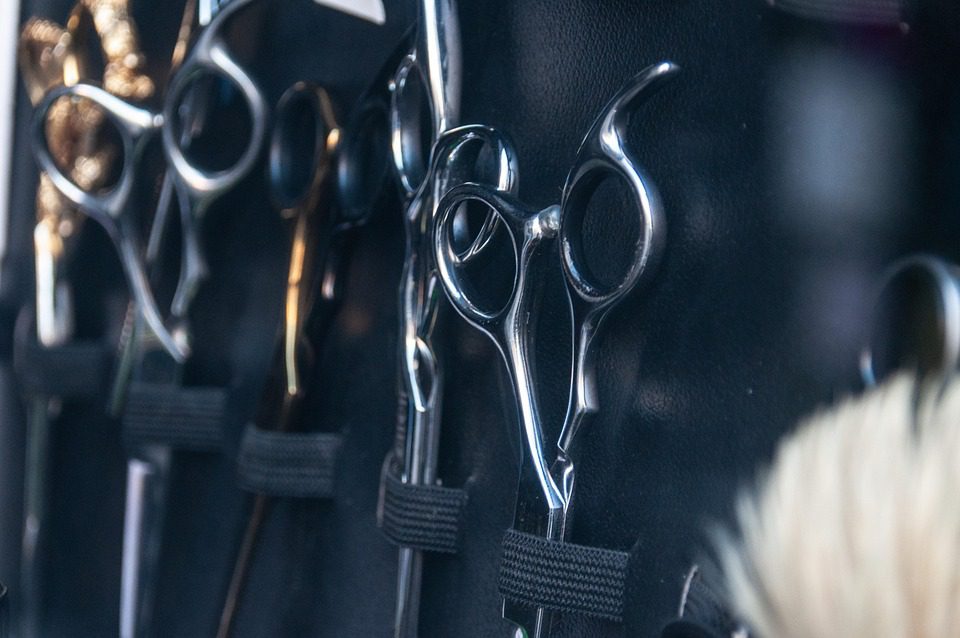
Towards the end of the century, the first hairdressing schools began to appear, and the profession grew in popularity. In 1918, a hairdressers’ strike brought London’s salons to a halt. It began with workers at Faulkner’s salons and was later joined by staff from Harrods, which employed 71 hairdressers. The strike ended successfully with a wage increase.
By the start of the Second World War, men’s barbershops were giving pubs a run for their money. Men went there not only for a haircut but also to talk, catch up on the news, and socialise. After the war, “beauty salons” began to appear. In 1969, Keith Wainwright opened “Smile,” London’s first unisex salon, which became a symbol of a new era in the business. He served famous stars like David Bowie and Paul McCartney. In the 1980s, Trevor Sorbie, a former art director at “Vidal Sassoon,” created the iconic “Wedge” and “Scrunch” hairstyles, which became symbols of the era. Sorbie’s style, which focused on geometry and understanding the client, completely changed the perception of hairdressing.
Thanks to its brilliant hairdressers and stylists, London has always been one step ahead of other cities. Different eras have encouraged bold experiments that have driven the hairdressing business forward. The modern art of hairstyling celebrates individuality, freedom, and practicality.
In essence, today’s hairdressing business is a true art form, spanning from traditional styles to bold, contemporary looks. London’s hairdressers remain leaders in the industry. Their historical legacy endures, inspiring new generations of specialists to develop this fascinating trade.