

During the latter half of the 19th century, the Arts and Crafts movement flourished in Great Britain as a defiant response to industrialisation and mass production. Rapidly spreading across Europe and America, it reshaped architecture, furniture, painting, and design. Within this cultural shift, bookbinding began to be viewed not merely as a trade, but as a fresh creative frontier for women. It was during this period that the Guild of Women-Binders secured its unique place in history. More at londonka.
The Rise and Fall of the Guild of Women-Binders
In 1898, Frank Karslake founded the Guild of Women-Binders. He possessed ambitious ideas but lacked practical experience in the book trade. Inspired by a Victorian-era exhibition in 1897, the London bookseller recognised the profession’s untapped potential. He reached out to the female participants of the event, inviting them to showcase their work at his shop. His “Exhibition of Artistic Bookbinding by Women” captured significant public attention, convincing him that the craft was a viable business venture.
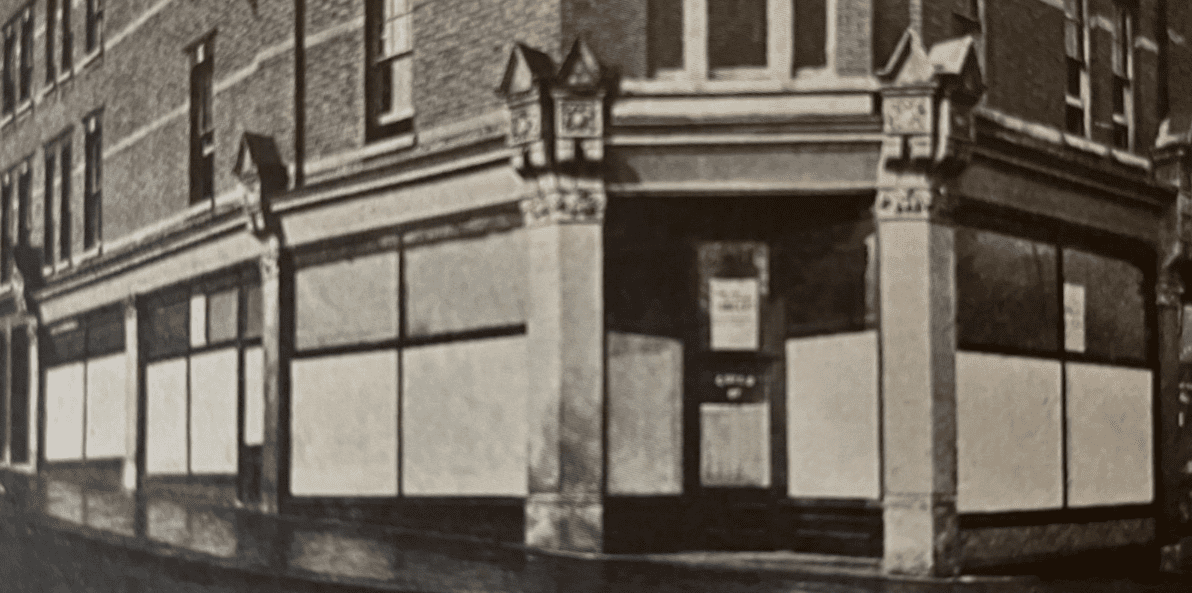
Shortly after, the Guild officially launched as a commercial enterprise, headquartered at Karslake’s bookshop at 61 Charing Cross Road. He quickly realised that teaching the craft could prove more lucrative than simply producing and selling books. Karslake frequently championed the idea that women were uniquely suited to bookbinding, citing their natural appreciation for beauty and manual dexterity.
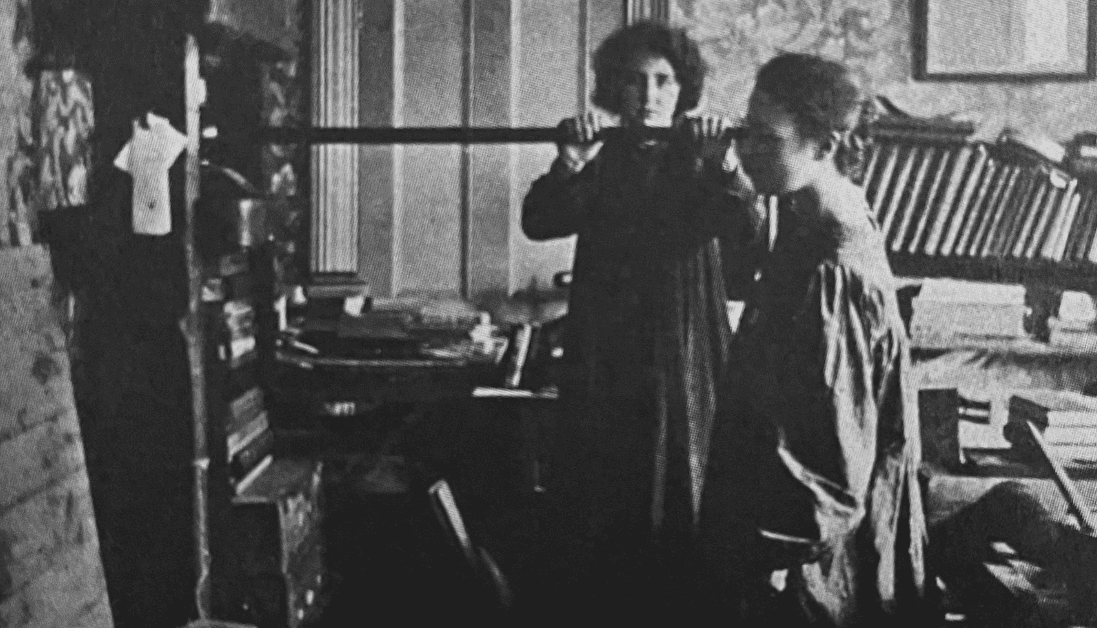
The Guild produced exquisite, handcrafted artistic pieces at a time when the trade was becoming rapidly mechanised. To support its training programme, an additional workshop led by Karslake’s daughter opened in 1899. The institution maintained an elitist character, exclusively admitting women with a background in art. By 1903, the Guild had trained approximately 25 to 30 students, as the cohort was strictly limited to a small number of middle-class women.
However, Karslake’s ambitions eventually outpaced his entrepreneurial skill. The Guild’s promised curriculum struggled due to a shortage of qualified instructors. While it did produce several highly skilled artisans, the output did not always meet the advertised standards or the quality promised in promotional materials.
Frank Karslake attempted to scale the Guild too aggressively, enrolling too many students and placing unrealistic demands on his staff. Suspicions began to circulate within professional circles that the intricate designs advertised were too complex for newly trained binders to achieve. Some critics even accused Karslake of passing off work from the Hampstead Bindery as Guild productions. This growing distrust among potential buyers left many bindings unsold.
As demand steadily declined, Karslake’s financial stability faltered. Ultimately, he was forced to close both of his ventures just a few years after their inception. The Hampstead Bindery ceased operations around 1901, while the Guild of Women-Binders managed to survive until 1904.
ArcGIS StoryMaps
Legacy and Impact of the Guild
Despite its short lifespan, the Guild of Women-Binders set a vital precedent for female professional communities within the decorative arts. It did more than just teach a craft; it provided women with employment after their training. In the Victorian era, this offered members a respectable income and a level of financial independence previously out of reach. The organisation united a group of exceptionally talented artisans, most notably Annie Smith MacDonald, Edith and Florence de Rheims, and Olive and Constance Karslake. These women collaborated with prestigious groups such as the Edinburgh Social Union, the Kirkby Lonsdale Handicraft Class, the Chiswick Art Workers’ Guild, and the Leighton Buzzard Handicraft Class.
ArcGIS StoryMaps Would you like me to check the meta tags or provide a summary of this translation for a social media post?