

In the mid-19th century, equal educational opportunities in Great Britain were far from a reality. Bedford College is widely regarded as the country’s first higher education institution for women. It became a hub for academic development, paving the way for new talent to enter the worlds of science, teaching, and research. Discover more at londonka.
The Founding and Growth of Bedford College
In 1849, social reformer and abolitionist Elisabeth Jesser Reid founded Bedford College in London. Her goal was to provide a liberal and non-sectarian education for women, something that was unavailable anywhere else in Great Britain at the time. After donating £1,500 to three trustees, Reid leased a house at 47 Bedford Square to establish the college.
Bedford College faced challenges in its early days, from a lack of funding to the varying academic preparedness of its students. In its first year, it enrolled only 68 individuals. To improve their academic standards, Elisabeth Jesser Reid opened a school alongside the college. Initially, all the lecturers were men, but the founder insisted on including women in the leadership. As a result, women secured four of the nine seats on the governing council.
Elisabeth Jesser Reid passed away in 1866, leaving a trust fund and the college buildings in the hands of three female trustees: Eliza Bostock, Jane Martineau, and Eleanor Smith. When the lease on Bedford Square expired, they relocated to 8 and 9 York Place. The two new properties functioned as a single complex, with the ground floor used for teaching and the upper levels serving as a student residence.
In 1878, the University of London opened its degree examinations to women. This allowed Bedford College students to earn Bachelor of Arts, Bachelor of Science, and Master’s degrees from the early 1880s. Furthermore, in 1891, the college began training its graduates to become secondary school teachers.
In 1900, the University of London was granted teaching status. As a constituent college, Bedford College received a new royal charter from the Privy Council. This change spurred its expansion and necessitated a search for larger premises. In 1908, the college secured a lease on a site in Regent’s Park, which was developed with modern facilities thanks to successful fundraising efforts.
Following the outbreak of the Second World War, Bedford College was evacuated to Cambridge, though some staff remained at the London site. This period was a significant test for the institution, marked by shortages of accommodation and resources. In 1941, bombing destroyed the college’s central building. Despite these immense difficulties, the college returned to Regent’s Park in 1944.
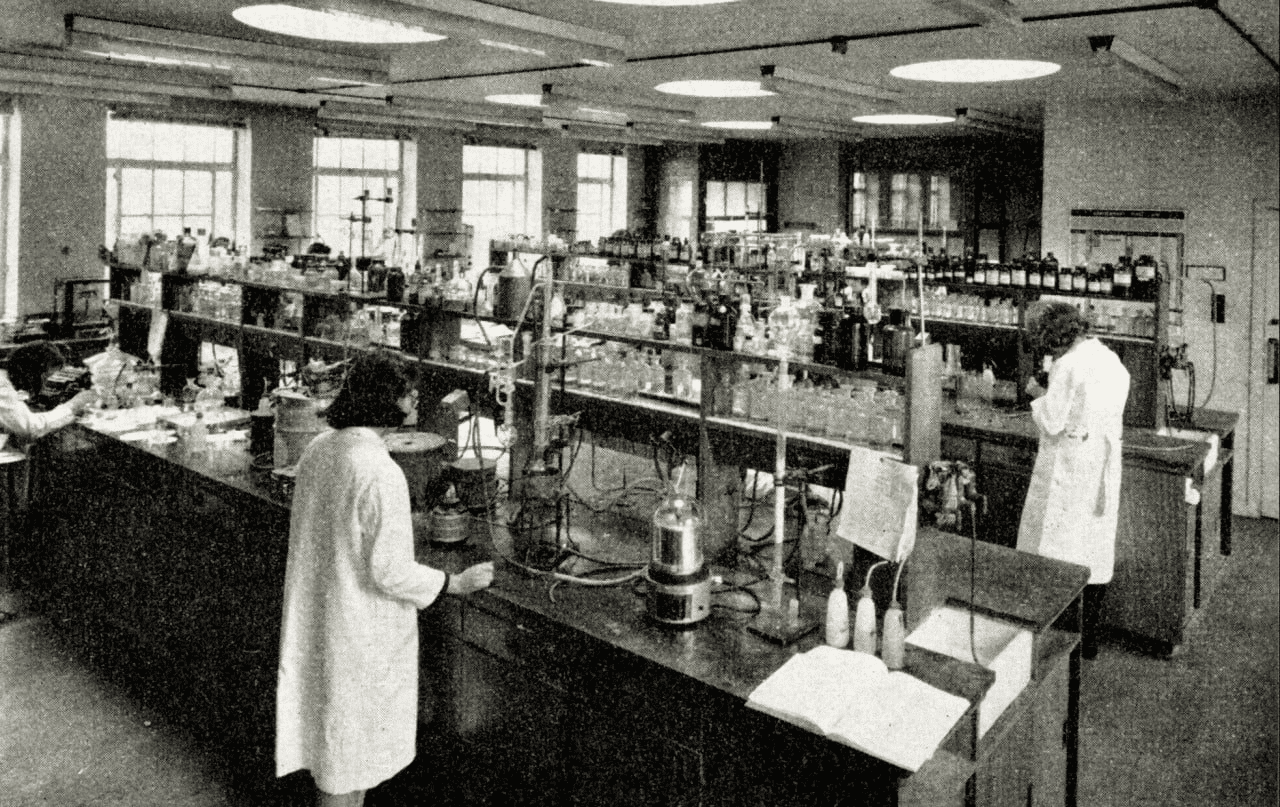
In the post-war era, Bedford College faced two main challenges: a growing student population and a severe housing shortage. To partly address the accommodation issue, it acquired long-term leases on several halls of residence in Regent’s Park, including The Holme, Hanover Lodge, and St John’s Lodge. The college also undertook a major reconstruction of its buildings under the direction of architect Maxwell Ayrton. The restoration was celebrated during the college’s centenary in 1949.
On 2 August 1965, Bedford College was granted a Supplemental Charter that permitted the admission of male students. Moving away from being a women-only institution brought new opportunities as well as fresh challenges. Faced with limited resources, the college began to explore merger options. In 1985, it merged with Royal Holloway College, forming the successor institution within the University of London: Royal Holloway and Bedford New College.
Flickr
The Legacy and Impact of Bedford College
Bedford College laid the groundwork for equal education in Great Britain. Its organisation and development were shaped by influential leaders such as Emily Penrose, Ethel Hurlbatt, and Dorothy Wedderburn. Together, they nurtured a great number of distinguished alumni, including Catherine Ashton, Chris Aldridge, David Bellamy, Elizabeth Blackwell, and Daphne Blundell. The reformed institution now collaborates with the University of Bedfordshire, the University of Huddersfield, and the University of Northampton.
Flickr