

Probably, everybody knows about a large number of social stereotypes regarding women and men. In the past, women usually agreed with their roles imposed by other people. If there were some cases of dissatisfaction, they were quickly reduced to nothing. However, later, the constant burden of stereotypes, principles and obligations led to a global movement for women’s rights. Most of its brightest representatives lived in Europe. London was one of those cities where many feminist organisations were created and where women managed to achieve social changes. What were the initial manifestations of this struggle? The story of the British feminist Mary Wollstonecraft can be a perfect example to consider this issue. Learn more at londonka.
Why did this woman become famous all over the world?
Maybe, it would be better for Mary Wollstonecraft to live in the 21st century. She would realise all her wishes no matter what in our time. However, apparently, the 18th-century society needed changes, and therefore, the birth of this woman was also necessary. She became known first of all for her extraordinary personality at that time. Most of the people around her thought she was so weird. A modern Londoner would hardly draw similar conclusions. Mary Wollstonecraft was a writer and philosopher, but she is best known for her writings on women’s education and the general equalisation of their rights with those granted to men. Her feminist views didn’t gain popularity during her life. However, they became the foundation of the global movement for women’s rights in the 20th century.
The formation of a strong character and the first literary and social interests
Mary Wollstonecraft was born in London on April 27, 1759. The girl has faced the problem of a contemptuous attitude towards women since her childhood. Unfortunately, her father was a bright example of a stereotypical man of that time. He often beat Mary’s mother (especially when he was drunk). Moreover, the family had significant financial problems. They got worse every year and eventually led to terrible consequences. Mary Wollstonecraft’s first literary interest arose during her friendship with Jane Arden. They spent a lot of time together, reading books, enjoying poetry and attending lectures given by Jane’s father. Then she published her first children’s book. Later, she began to cover more serious and important topics. Feminist ideas permeated her works and her own life. It can be proven by her sister’s story. In 1784, Eliza experienced the sufferings of her married life and most likely had postpartum depression. Mary Wollstonecraft convinced her sister to leave her husband and child and even arranged an escape. However, the writer must have forgotten in what time and under what circumstances they lived. As a result, her sister was severely condemned by society and couldn’t remarry. She lived a life of poverty, doing hard work.
Further life
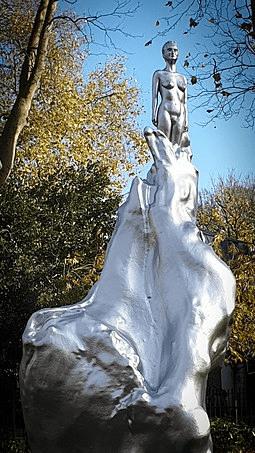
Mary’s life was filled with situations where she challenged society, only to receive condemnation in return. For example, she had several love affairs with men, which was considered indecent at the time. One of them happened in France. Mary Wollstonecraft went to Paris in 1792. There, she witnessed the terrible events of the French Revolution. Then it became the foundation for her numerous literary works. In general, her career wasn’t long, but Mary managed to write travel stories, novels and treatises. The writer died from postpartum fever at the age of 38, a few days after the birth of her second daughter.