

Café · London · ⭐ 9.1/10 · 1434 reviews · updated: 2026-08-06 11:05:02
Address: 21 Warren St, London W1T 5LT, United Kingdom
Almost every café buys its coffee. Qima grows it. The same company works with smallholder farmers in Yemen, guides the processing, roasts the result in-house and pours it here — which is why it is described as the UK’s first tree-to-cup café, and why the conversation at this counter starts several thousand miles further back than at any other bar in Fitzrovia.
Highlights
- A tree-to-cup operation: one company across growing, processing, roasting and serving, with Yemen at the origin of the story.
- Founded by a British-Yemeni engineer who left an oil-and-gas career to rebuild a coffee supply chain in the middle of a war.
- The same team led the research that identified Yemenia — a previously undocumented genetic group of arabica, and the largest such find in about a century.
- Yemeni drinking traditions are on the menu properly, not as decoration: qishr made from the dried coffee cherry, and spiced preparations with cardamom and ginger.
- A serious in-house pâtisserie, with origin flavours worked into European pastry — za’atar, tahini, cardamom — and hybrids you will not find elsewhere.
- Recognised with a Good Food Awards Blue Ribbon for 2025/26, alongside the group’s second London site.
What’s in the cup
The short answer to the question every coffee description should answer: yes, they roast, and they do considerably more than that. Qima’s chain runs from the farm forward — the company works with smallholders at origin, guides cherry selection and processing, applies its own fermentation protocols, roasts in-house, and then serves the result. Very few cafés anywhere can describe their coffee that way, and it changes what the menu means: you are not choosing between roasters, you are choosing between lots from a single, unusually deep catalogue.
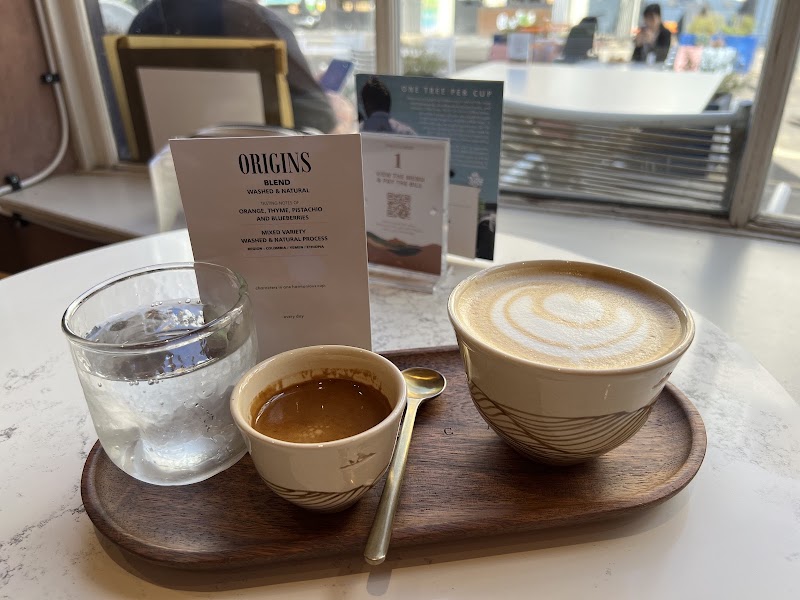
Yemen is the centre of gravity. Its coffee is genuinely different — ancient varieties grown at altitude on terraces by farming families whose methods predate almost everything in the modern speciality playbook — and the cup shows it: dense, fruit-forward, sometimes closer to a fortified wine than to what most people mean by coffee. Pour-over is the method that shows this best, and it is the honest recommendation for a first visit. Espresso and milk drinks exist and are well made, but milk is not what a rare Yemeni lot is asking for.
The bar also serves the drinking traditions that came with the origin, which is unusual and worth trying. Qishr is brewed from the dried husk of the coffee cherry rather than the bean — lighter, fruitier, closer to a spiced infusion — and there are spiced preparations built with cardamom and ginger in the Yemeni style. For anyone at the table who does not want a coffee, that is a far more interesting answer than the usual hot chocolate.
Who’s behind it
Faris Sheibani is British-Yemeni, trained as a chemical engineer at Cambridge, and was working in oil and gas before he left to work on Yemen’s coffee supply chain after the country’s civil war began in 2015. That is an unusual founding story even by the standards of a genre full of career-changers: the business was built in the middle of a conflict, in a country that had effectively fallen off the speciality coffee map despite being one of the places coffee drinking began.
The scale is now substantial — thousands of smallholder farmers across dozens of Yemeni villages, plus other origins — and the most striking output is scientific rather than commercial. Sheibani led the research that identified Yemenia, a genetic group of Coffea arabica that had not previously been documented, described as the largest such discovery in roughly a century. A café attached to that work is a different proposition from a café attached to a good buyer.
The social arm is concrete rather than vague: through the Qima Foundation, every cup sold funds a young coffee tree for a farmer, which addresses one of the practical bottlenecks at origin — access to seedlings. It is a small, checkable mechanism rather than a slogan about sustainability.
What it’s for
Tasting something you cannot get elsewhere. The main reason to come. Order a pour-over of a Yemeni lot, take a pastry, and give it forty minutes. Treated as a tasting stop rather than a background venue, this is one of the most rewarding coffee visits in central London.
Coffee and pastry with someone. The pâtisserie counter makes this a genuine two-part visit rather than a drink with a biscuit, and the room suits a catch-up of an hour.
Laptop work — short sessions only. Be realistic about the room. It is compact and polished rather than sprawling, it fills at the coffee-and-pastry peaks, and it is not built as a workspace. A focused hour is fine; a working day would be taking a table other people are waiting for.
A solo stop. Sitting alone here is entirely normal — a good share of guests come specifically to drink something carefully and leave.
Buying beans. Given the rarity of what is on the shelf, this is a real reason to come rather than an upsell. If a lot lands with you, take it home; it may not be there next season.
The space
Compact and polished. The room is built around the bar and the pâtisserie counter, with a modest number of seats and tables outside when the weather allows. It is designed to look good and to move people through it at a decent pace, not to hold a crowd for the afternoon.
That is also the honest weakness: at the peaks, which are the mid-morning and mid-afternoon pastry rushes, it gets congested, and there is no second room to escape into. Anyone who wants space and quiet should aim between the rushes or go for the group’s larger, later site elsewhere in central London. What you get in exchange is proximity — the bar, the brewing and the pastry counter all within a few steps, which suits a place where the point is to pay attention to what is in the cup.
Beyond coffee
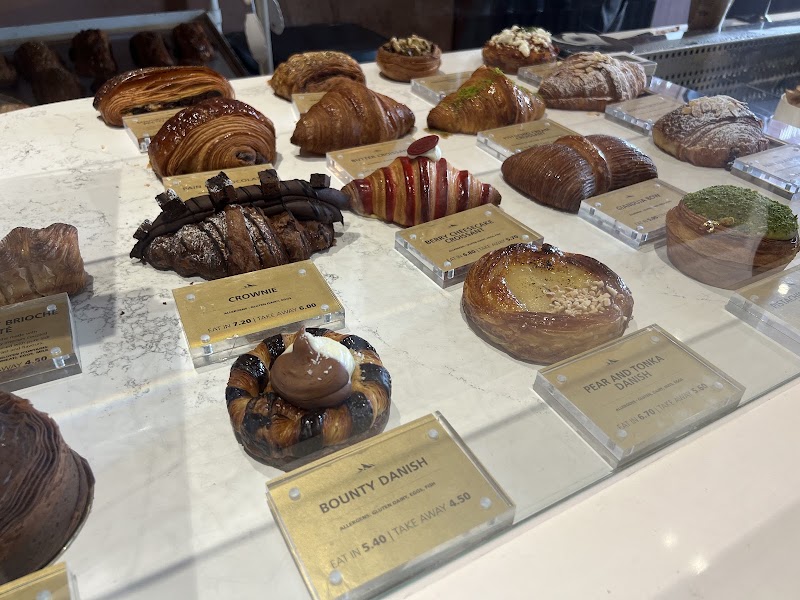
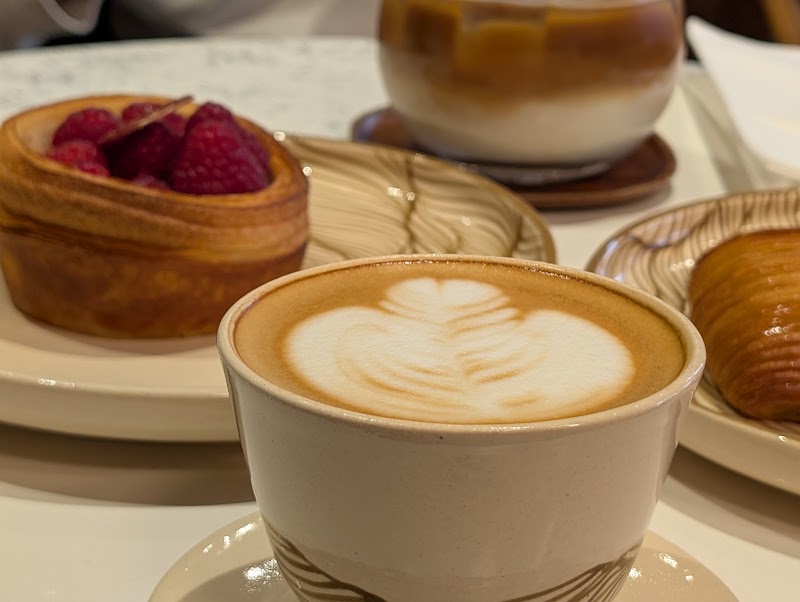
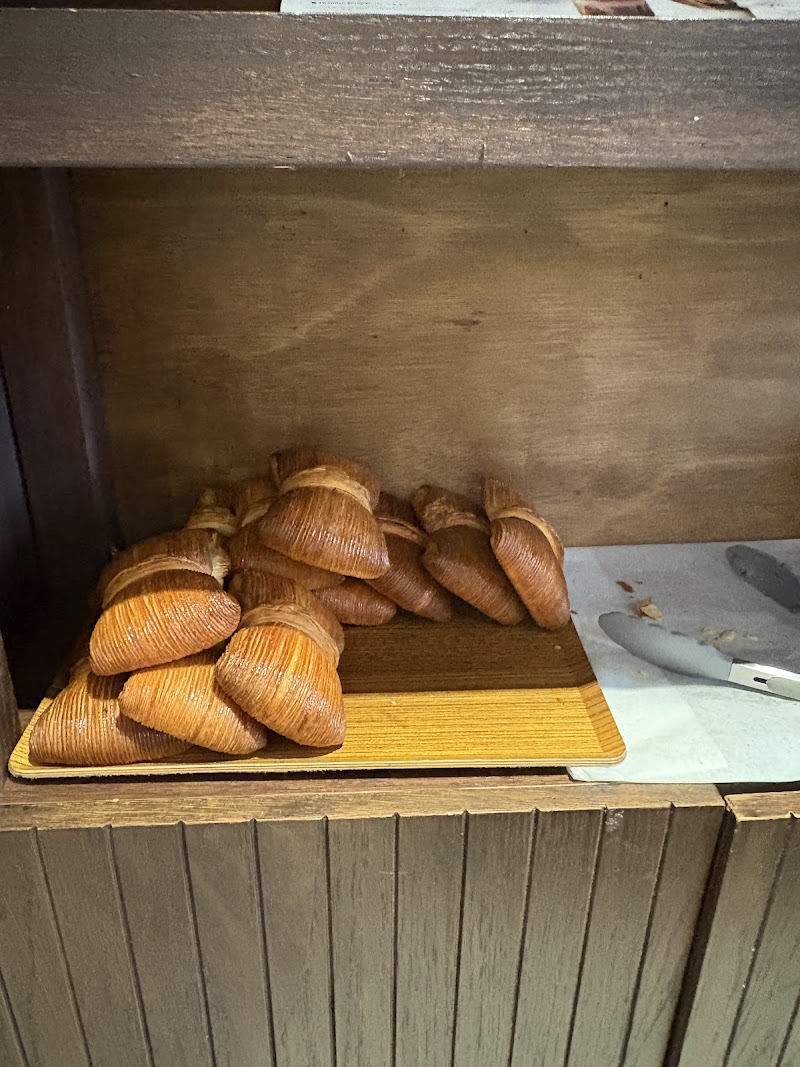
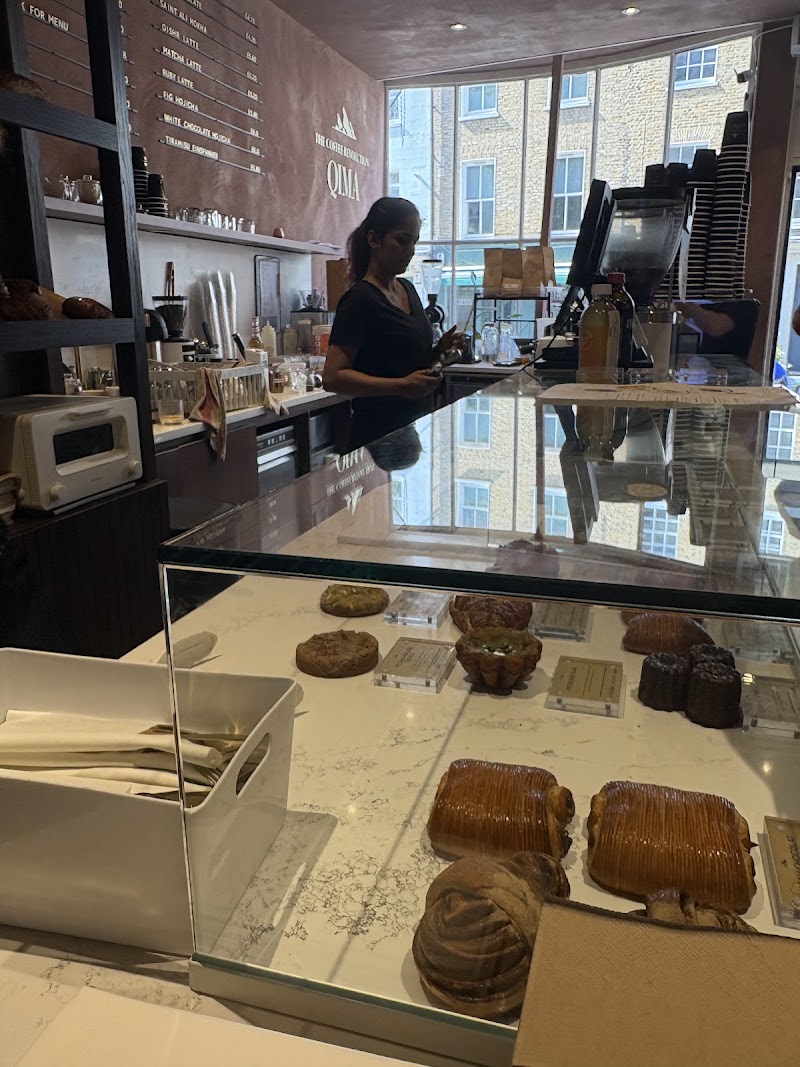
The pâtisserie is in-house and it is not a side project — it is in the name. The counter runs classic French technique through the lens of the coffee’s origins: croissants and canelés and choux alongside za’atar pastries, chai buns, tahini and cardamom worked into the sweets, and hybrids like the croissant-cookie that exist mostly to be tried once and then ordered again.
The binary answer, since it matters: yes, everything on that counter is made by the café’s own pastry operation, not bought in. That is why the pastry is a reason to come rather than something to have with coffee.
When to come
This is a central Fitzrovia café living on office hours, university traffic and the passing crowd from the station. The calmest windows are the stretches between the two pastry rushes — after the pre-work wave has cleared and before the mid-afternoon one builds — and that is when the bar has time to talk you through what is on filter.
Weekends are gentler in one sense and busier in another: the office trade disappears, but the people who came specifically for the coffee arrive instead. In warm months the outside tables change the maths considerably, since they roughly extend the room. Current opening times are shown in the schedule block on this page.
Getting there
Northern Fitzrovia, essentially on top of Warren Street station, with Euston Square and Great Portland Street both a short walk and Goodge Street not much further. The BT Tower is the landmark that tells you which way you are facing, and the university quarter is immediately to the east. It is a walk-past location rather than a destination hidden down a side street — which is why it works as well for a five-minute stop as for a considered visit.
Good to know
Three things that will make the visit better. First, ask what Yemeni lots are open today and take one as a pour-over; the catalogue rotates, the staff know it in detail, and the espresso menu is not where the interesting part of this café lives. Second, try qishr at least once — it is made from the dried fruit around the bean rather than the bean itself, and it is the oldest way of drinking coffee in the region the company comes from. Third, do not treat the pastry counter as an afterthought; it carries an award of its own and half the reason people return.
One more piece of context. There is a second, larger site in Covent Garden that opened in 2025 as the group’s flagship, with its own roasting on site. If this room is full, or you want the fuller version of the same idea with more space to sit, that is where to go — and both sites carry the same Blue Ribbon recognition.
Questions and answers
Do they roast their own coffee?
Yes, and further back than that: the same company works with the farmers at origin, guides processing, roasts and serves. That is what the tree-to-cup description means.
Is Yemeni coffee actually different?
Yes. Ancient varieties, high-altitude terrace farming and traditional processing produce a dense, fruit-forward cup that tastes noticeably unlike the Latin American and East African coffees most London bars pour.
What is qishr?
A traditional Yemeni drink brewed from the dried husk of the coffee cherry rather than the bean — lighter and fruitier than coffee, often spiced.
What should I order on a first visit?
A pour-over of whichever Yemeni lot is open. Espresso and milk drinks are well made, but milk covers exactly what you came to taste.
Can I work here with a laptop?
For a focused hour, yes. For a working day, no — the room is compact, it fills at the pastry peaks, and there is nowhere to retreat to.
Are the pastries made here?
Yes, in-house, and they are a genuine reason to come: classic French technique crossed with flavours from the coffee’s origins.
Can I buy beans to take home?
Yes, and it is worth doing — the rare lots rotate, so what you liked today may not be available next season.
Is there another branch?
Yes — a larger flagship opened in Covent Garden in 2025, with roasting on site and more room to sit.
Opening hours
| Day | Hours |
|---|---|
| Monday | 08:00–19:00 |
| Tuesday | 08:00–19:00 |
| Wednesday | 08:00–19:00 |
| Thursday | 08:00–19:00 |
| Friday | 08:00–19:00 |
| Saturday | 09:00–19:00 |
| Sunday | 09:00–19:00 |
Photos
Visitor reviews
Reviews last updated: 2026-08-06 11:05:02
Data is refreshed monthly. Sources: londonka.uk and editorial picks based on reviews.
справді дуже смачні напої та тістечка. дуже сподобалися матча та ходжіча (один з моїх улюблених у Лондоні), а баскський чізкейк був справді смачним, дуже м’яким і пухнастим. на мою думку, трохи дороговато, але не суттєво…
Це не дуже дешево, але для Лондона це досить стандартна ціна — мабуть, нам доведеться звикнути до того, що за гарячий напій і солодке частування ми платимо стільки ж, скільки за звичайну страву! Але принаймні якість спра…
Це був чудовий досвід. Чудова єменська кав'ярня з автентичною атмосферою. Кава та обслуговування були чудовими, як і атмосфера. Магазин шикарний, а ванна кімната настільки вражаюча, що про неї варто написати відгук. Так…
Кафе «Qima» – справжня перлина Лондона. Випічка там неймовірно смачна – свіжа, легка та насичена смаком – одна з найкращих, яку я куштував у місті. Обслуговування також чудове, персонал привітний та уважний, що робить вр…
Відвідали близько 14:00 у суботу, були вільні місця як у кафе, так і зовні. Раніше намагалися зайти у святковий день, але було повно людей, не потрапили. Але сьогодні все було ідеально.
Персонал – суперпривітний та кори…